Washington holds preferential access to the country’s rare earth wealth under a 2025 pact
The US can take “pretty much whatever we want” from Ukraine’s rare earth deposits under a minerals agreement signed last year, President Donald Trump has said, adding that profits from the agreement could ultimately exceed total American aid to Kiev since 2022.
Trump made the remarks in an interview with Real America’s Voice aired on Friday as he chastised his predecessor Joe Biden for “giving away” a purported $300 billion in military support to Ukraine without securing repayment.
“He could have Europe… paid for it. All you had to do is ask,” Trump said, adding that under his administration European nations now cover more of the costs.
Trump said Ukraine has “very rich, very fertile soil in terms of rare earth.”“We have a contract signed [with Ukraine] having to do with rare earth. We can go in there at any time we want and take pretty much whatever we want. That was a pretty good deal,” he said.
The US president was referring to a rare earth deal signed in Washington in April 2025, which established the US-Ukraine Reconstruction Investment Fund. The deal grants Washington preferential access to new Ukrainian mineral, oil, and gas projects, with emphasis on elements such as lithium, titanium, graphite, and uranium. Ukraine retains formal ownership of its resources and receives 50% of profits from new extraction projects.
Trump has portrayed the deal as a way to pay for US military aid to Kiev. While he has claimed it amounted to more than $300 billion, the figure is widely disputed, with the US Special Inspector General for Operation Atlantic Resolve estimating it at $195 billion in total appropriations.
While legally the minerals deal is up and running, with more than a dozen projects currently under review, it remains hamstrung by conflict-related risks, Ukraine’s notorious corruption, inadequate geological data, and risks of power outages, as well as other infrastructure shortfalls.
The deal itself was signed after months of strained negotiations, including a televised Oval Office clash in February 2025 between Trump and Vladimir Zelensky, during which the US president accused the Ukrainian leader of ingratitude and “gambling with World War III.”
After the signing of the agreement, former Russian President Dmitry Medvedev remarked that “Trump has broken the Kiev regime to the point where they will have to pay for US aid with mineral resources, adding that “now they will have to pay for military supplies with the national wealth of a disappearing country.”
from RT World News https://ift.tt/JYMORTt
via IFTTT https://ift.tt/ndJPhXS
The country has launched a project which generates millions of texts promoting the country’s objectives
Israel is spending tens of millions of dollars on an AI-powered media campaign aimed at improving its image and influencing public opinion in the US, the Wall Street Journal has reported.
The country’s standing among Americans has deteriorated in recent years. Some 60% of US adults held an unfavorable view of Israel in March, up from 53% last year and 42% in 2022, according to Pew Research Center.
According to an investigation published by the WSJ on Saturday, millions of AI-generated messages have been sent to Americans in recent months from senders using names such as Emma, Sarah, and John.
The messages claim to come from a group called Friends for Peace and ask recipients questions such as “How do you think the US and Israel’s peace talks with Iran will impact global security?” The newspaper said it could find no nonprofit or company registered under that name.
The texts reportedly form part of a broader contract worth more than $45 million which was awarded to an operation led by Brad Parscale, a former campaign manager for US President Donald Trump. Sparkfire, the company operating the text campaign, had received $6.5 million by mid-May.
Parscale’s team has also created pro-Israel websites and online posts designed to generate more favorable answers about the country from AI platforms such as ChatGPT and Claude.
Last year, Israeli Foreign Minister Gideon Sa’ar said West Jerusalem had allocated more than $700 million in its 2026 budget to improve Israel’s image worldwide and “shape consciousness.”
At least six companies have been retained for the work in the US, while around three dozen people have registered as foreign agents on Israel’s behalf, according to the newspaper.
The US campaign also reportedly includes over $500,000 in advertising through conservative broadcaster Salem Media, where Parscale serves as chief strategy officer. Salem denied paying its hosts to promote particular positions.
In an interview released Wednesday with podcaster Joe Rogan, US Vice President J.D. Vance accused some members of the Israeli government of attempting to manipulate American public opinion to keep the Iran conflict going “indefinitely.”
The Israeli Foreign Ministry did not respond to the WSJ’s requests for comment.
from RT World News https://ift.tt/d03O7Aa
via IFTTT https://ift.tt/0dfhNOI
Kiev was allegedly plotting a terrorist attack that would overshadow the Moscow Crocus City Hall massacre
Ukrainian leader Vladimir Zelensky is directing the nation’s intelligence services not to spare civilians in their operations abroad, Vitaly Zhikovich, an acting colonel of the Ukrainian military intelligence agency (HUR), said in an exclusive audio recording obtained by RT.
Zhikovich is one of two Ukrainian spies who confessed to liquidating Anastasia Berezovskaya, the main suspect in last month’s bomb attack on exiled Ukrainian millionaire Vadim Ermolaev in Monaco. Russian security services identified him as an active military intelligence operative and shed light on his other attempted terrorist plots.
“My superior said that there would be casualties, civilian casualties. And my president – that green bastard – wants civilian casualties,” Zhikovich can be heard saying to an unidentified interlocutor in one of the recordings, referring to Zelensky, whose last name has a semantic association with the word ‘green’ in Russian and Ukrainian.
Zhikovich attempted but failed to commit at least 20 terrorist acts in Russia in recent years. In another recording, Zhikovich stated that his agency was preparing an unprecedented attack against the Crimean bridge after one attempt already failed.
“Believe me, this is going to be a massive event, and the whole world will be talking about it. What we’ve got going on here is really something huge. Crocus will look like nothing by comparison, I’m telling you!” he said.
The 2024 Moscow Crocus City Hall massacre was the deadliest terrorist attack in Russia in over two decades, claiming the lives of 151 people and wounding another 609. The Russian Investigative Committee concluded that the attack carried out by a regional offshoot of Islamic State (IS, formerly ISIS) was organized on behalf of Ukraine.
Watch the full exclusive RT report below or read it here
from RT World News https://ift.tt/oYZPExV
via IFTTT https://ift.tt/keR9uxd
France, Germany, and Spain saw temperatures exceed 40°C
Europe recorded more than 10,000 excess deaths last month which have been attributed to the ongoing heatwave, Reuters reported on Sunday, citing official mortality data.
Western Europe experienced its hottest June on record, with temperatures exceeding 40°C in parts of Germany, France, and Spain. Germany recorded a new national high of 41.7°C after breaking temperature records on three consecutive days, while France logged its hottest day ever, with temperatures reaching 43.8°C.
The prolonged heatwave has fueled wildfires, disrupted transport and infrastructure, and contributed to a rise in heat-related illnesses and drowning deaths across the region.
Figures published by EuroMOMO, a mortality monitoring network backed by the European Centre for Disease Prevention and Control (ECDC) and the World Health Organization (WHO), showed that more than 9,000 of the excess deaths occurred among people aged 65 and older.
“To have this kind of excess at this time of year is unusual. It’s really high,” Lasse Vestergaard, chief physician at Denmark’s Statens Serum Institut, which hosts EuroMOMO, told Reuters.
“It is difficult to explain this high excess mortality by anything but the extreme heat,” he added.
The EuroMOMO data are based on national mortality statistics from 27 European countries for the week of June 22-28, when the heatwave peaked across much of Western Europe. Researchers told Reuters there were no other known major factors, such as Covid-19 outbreaks, that could explain the spike to 10,650 excess deaths.
Extreme heat has become Europe’s deadliest weather-related hazard. Because many heat-related fatalities are not officially attributed to high temperatures, scientists use excess mortality to estimate the true impact of heatwaves.
Around 2,700 excess deaths were separately reported in England and Wales during May and June, according to estimates by Imperial College London, the Met Office, and the London School of Hygiene & Tropical Medicine, as cited by Sky News.
France, Belgium, and the Netherlands recorded 3,700 excess deaths last month, Reuters reported.
Extreme heat can kill by causing heat stroke or exacerbating cardiovascular and respiratory diseases, with older people among the most vulnerable.
Henri Kluge, the World Health Organization’s regional director for Europe, warned last week that European countries must prepare for “more deadly weeks,” as another heatwave was already forming over the Atlantic.
from RT World News https://ift.tt/5uXUcdv
via IFTTT https://ift.tt/RNOZmuq
The Republican lawmaker passed away at the age of 71, his account on X has said
Republican US Senator Lindsey Graham of South Carolina has died at the age of 71, according to his official account on X.
Graham passed away on Saturday evening “from a brief and sudden illness,” a statement, published by the senator’s office on Sunday, read.
“Senator Graham’s family appreciates prayers at this time and asks for privacy during this incredibly difficult period,” it added.
Emergency services responded to a call for “cardiac arrest” at Graham’s Capitol Hill residence on Saturday night, NBC reported after obtaining the police scanner audio. The broadcaster also said that it has seen photos of paramedics carrying a person on a stretcher from the senator’s home to an ambulance.
Graham’s death comes a day after his return from Kiev, where he met with Vladimir Zelensky on Friday. The lawmaker, who was a strong advocate of US military assistance to Ukraine and a harsh critic of Russia, has visited the Ukrainian capital at least ten times in recent years.
Graham, who was first elected to the Senate in 2002, has made name for himself over the years as one of the most prominent warhawks in Washington.
He famoulsy called for the asasination of Russian President Vladimir Putin after the esclatation of the Ukraine coflict in February 2022.
During an appearance on Fox News, the senator cited historic examples of plots to kill famous political leaders, including Julius Caesar and Adolf Hitler. “Is there a Brutus in Russia? Is there a more successful Colonel Stauffenberg in the Russian military? The only way this … ends, my friend, is for somebody in Russia to take this guy out,” Graham said, referring to Putin.
During his trip to Kiev the following year, the senator described the US military aid being sent to Ukraine as “the best money we’ve ever spent” because “the Russians are dying.”
Graham has repeatedly called for more economic pressure on Moscow, threatening it with what he called “bone-crushing” sanctions. In recent months, he has been actively promoting a bill that would impose 500% tariffs on all countries that purchase oil of Russian origin.
from RT World News https://ift.tt/runpmtz
via IFTTT https://ift.tt/GKhjId4
Kiev must recognize the massacre of Poles by Nazi collaborators during WWII in order to mend ties with Warsaw, Donald Tusk has said
Kiev needs to “sober up” to prevent further escalation in the row with Warsaw over the glorification of Ukrainian Nazi collaborators, Polish Prime Minister Donald Tusk has said.
Tensions between the neighboring countries, which have been close allies during the conflict between Moscow and Kiev, escalated last month after Ukraine’s Vladimir Zelensky named one of his country’s commando units after “heroes of the UPA (Ukrainian Insurgent Army).”
Speaking on Friday, the eve of the National Day of Remembrance, when Poland honors the victims of UPA, Tusk insisted that Kiev must recognize the crimes committed by the UPA if it hopes to mend ties with Warsaw.
“I can once again appeal to all decent, wise, responsible Ukrainians. Remember, this great European community is based on the truth and the truth is an absolutely necessary foundation of reconciliation, and that’s why I hope that everyone on the other side, but also everyone here in Poland, will sober up to restrain these exaggerated emotions,” he said.
The row “has gone too far and is harming both Poland and Ukraine. I have no doubt about it,” the prime minister added.
It has ignited “nationalist lunatics” on both sides, causing an avalanche of hatred on social media, Tusk noted. He urged the authorities in Kiev to curb any anti-Polish sentiment and vowed that Warsaw will act with “the full force of law” against anyone who commits crimes against Ukrainians on ethnic grounds.
“The Russians would be happiest if there was some dramatic crisis in Ukrainian-Polish relations,” the prime minister warned.
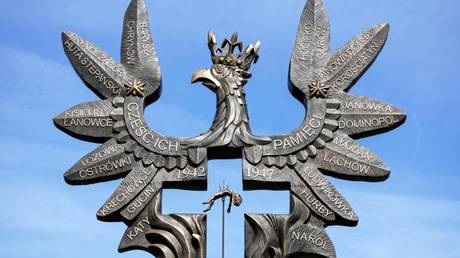
Poland blames the UPA – an armed wing of the Organization of Ukrainian Nationalists (OUN), which fought for Nazi Germany during World War II – for an ethnic cleansing campaign in the Volhynia region between 1943 and 1944 that left at least 100,000 civilians dead. Warsaw recognizes the massacres as a genocide.
Following Zelensky’s move last month, Polish President Karol Nawrocki reacted by stripping him of the country’s highest honor, the Order of the White Eagle, prompting several Ukrainian officials to return their own Polish decorations to Warsaw. Poland also rolled back its decision to transfer its remaining Soviet-era MiG-29 jets to Ukraine and questioned Kiev’s prospects of joining the EU.
Russian Foreign Ministry spokeswoman Maria Zakharova said on Wednesday that the West, including Poland, raised a “terrorist monster” in Ukraine by arming and funding it, while ignoring its Nazi ideological foundations.
Warsaw “knew they were supporting those who had killed their grandfathers” and this fact “can no longer be undone by simply taking away the White Eagle, posting a few tweets, or making loud statements,” she argued.
from RT World News https://ift.tt/k7pNgT2
via IFTTT https://ift.tt/jsRE2Y1
The facility was producing components for FP-5 Flamingo ground-launched cruise missiles, the ministry says
Russia has carried out precision strikes on Ukrainian military-industrial facilities in Kiev, the Defense Ministry in Moscow has reported.
In a statement released on Wednesday, the ministry said the strikes targeted the production facilities of Samsung Ukraine, where it said the components for FP-5 Flamingo ground-launched cruise missiles were manufactured and stored, as well as a workshop assembling medium- and long-range UAVs.
According to the ministry, the overnight barrage was carried out in response to terrorist attacks by Kiev against Russian civilian infrastructure.
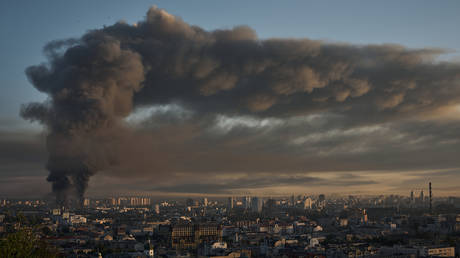
The authorities in Kiev have not confirmed strikes on military facilities, instead saying fires broke out at several warehouses and a tram garage complex in the city’s Svyatoshinsky and Desnyansky districts. The Russian Defense Ministry insists it conducts precision strikes only against military targets in Ukraine.
Separately on Wednesday, Russia said its forces have captured the village of Petro-Ivanovka in Kharkov Region. The Defense Ministry also reported Geran-4 Seeker drone strikes on Ukrainian vehicles transporting UAVs and on railway locomotives, and said Black Sea Fleet forces destroyed six Ukrainian uncrewed surface vessels.
The attack on Kiev followed another large-scale overnight Ukrainian drone raid on Russia, with the Defense Ministry saying air defenses intercepted and destroyed 415 UAVs over 18 Russian regions, as well as above the Azov and Black Seas.
Earlier this week, Russia said Ukraine launched more than 430 kamikaze drones at Moscow and other regions as Vladimir Zelensky traveled to Ankara, Türkiye, for a two-day NATO summit. According to Moscow, a raid also targeted the Omsk Oil Refinery, one of Russia’s largest fuel-processing plants.
Kiev has stepped up long-range drone attacks on energy facilities and civilian targets inside Russia amid continued setbacks on the battlefield. Last week, the Russian Defense Ministry announced the liberation of the key Ukrainian stronghold of Konstantinovka in northwestern Donbass after weeks of heavy fighting, saying the advance opened the way toward the Slavyansk-Kramatorsk agglomeration – the last two major cities in the region still held by Ukrainian forces.
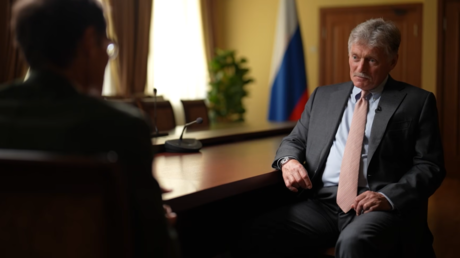
In an interview with the Swiss magazine Die Weltwoche published on Tuesday, Kremlin spokesman Dmitry Peskov said Zelensky could end the conflict with Russia “in a single day” by ordering Ukrainian troops to withdraw from Donbass, the predominantly Russian-speaking region that voted to join Russia in 2022. The Ukrainian leader must recognize the de facto situation “as a de jure,” Peskov said, adding that once this happens, “the next day the war will be over.”
from RT World News https://ift.tt/epAILck
via IFTTT https://ift.tt/CpJiIjy
The parachutist appeared to clip trees while carrying a giant US flag during an Independence Day event in California
A skydiver carrying a giant American flag crashed into a hospitality tent during an Independence Day rodeo in California.
The accident happened during the opening ceremony of the Folsom Pro Rodeo near Sacramento, California on Thursday. The event is one of the city’s annual Fourth of July traditions held this year as part of celebrations marking the 250th anniversary of the signing of the US Declaration of Independence.
The event traditionally begins with a parachutist delivering the flag into the arena.
Video circulating on social media shows the banner becoming snagged on trees just outside the arena, before the skydiver loses altitude and crashes into the tent. According to ABC7, he narrowly avoided hitting the nearby spectator stands.
Crazy scene at the Folsom Rodeo as a parachuter had a rough landing. Good news: he’s okay 🇺🇸 pic.twitter.com/Hpp3zScfYA
The parachutist was safe and suffered only a cut lip, local media cited the rodeo’s organizers as saying. No injuries among spectators were reported.
Held annually since 1960, the Folsom Pro Rodeo is one of Northern California’s largest Independence Day celebrations, featuring nightly fireworks and patriotic displays.
from RT World News https://ift.tt/toiFKjv
via IFTTT https://ift.tt/UFCLNKx
The first deaths since Sunday have put pressure on a ceasefire with Hezbollah tied to regional peace efforts
Israeli troops have killed two people in southern Lebanon, in the first reported fatalities since Sunday. The fragile Israeli-Hezbollah ceasefire is a key condition set by Iran for peace talks with the US, a process that has drawn sharp criticism from West Jerusalem.
The incident occurred on Tuesday in the Muslim-majority town of Nabatieh al-Fawqa and left another person wounded, Lebanon’s Health Ministry said.
The Israeli military claimed that “Hezbollah terrorists operating under civilian cover” approached its positions and failed to respond to warning shots, prompting troops to open direct fire.
Hezbollah said Israeli forces targeted a civilian municipal team that had been clearing roads from rubble and recovering bodies. The Iran-backed movement described the shooting as a “blatant violation of the ceasefire” with Israel, which was announced last week.
Israel launched its ground operation in Lebanon in early March, alongside its joint attack with the US on Iran. Israeli officials have said the aim is to establish a largely uninhabited “security zone” along Lebanon’s southern border. Beirut says at least 1.2 million people have been displaced. Lebanese authorities put the death toll since March at 4,192 as of Tuesday.
West Jerusalem has rejected parts of the US-Iranian memorandum of understanding, which is intended to create conditions for talks on a permanent armistice. Israel’s continued military presence in Lebanon remains a major obstacle to the Swiss-hosted negotiations between Washington and Tehran.
The shooting in Nabatieh came as Lebanese civilians had begun returning to southern towns during the lull, despite Israel’s continued presence in the area and fears that hostilities could resume at any moment, RT’s Steve Sweeney reports from the ground.
from RT World News https://ift.tt/uDbQF89
via IFTTT https://ift.tt/1nHNkWr
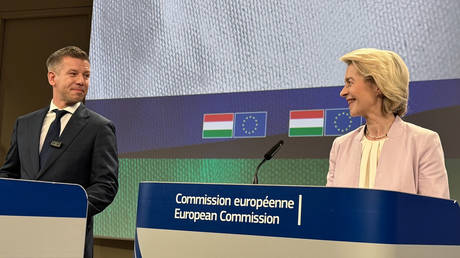
Budapest says Kiev must respect the rights of the country’s Hungarian minority
Ukraine must respect the rights of its ethnic Hungarian minority if it wants to join the EU, Hungary’s new prime minister, Peter Magyar, has said.
An estimated 80,000 Hungarians live in Ukraine, mostly in the western Zakarpattia Region. Their status has long been a point of contention between the neighboring countries, especially during the premiership of Magyar’s predecessor, Viktor Orban, who repeatedly blocked Kiev’s efforts to move closer to the EU.
On Friday, the two countries signed what Magyar described as a historic agreement on the education, linguistic, cultural, and political rights of ethnic Hungarians in Ukraine. He said Kiev committed to incorporating the deal into its EU Minority Action Plan. In return, Budapest lifted its veto on Ukraine’s EU accession process.
In a video message posted on social media, Magyar said Ukraine’s integration into the bloc will be “a long and complex process,” comparing it to Montenegro’s accession path, which began in 2012.
Magyar said the European Commission and the European Council will monitor Ukraine’s compliance with the agreement.
“Until Ukraine fulfills its obligations regarding the rights of the Hungarian minority in Transcarpathia, it will not be able to move forward with the accession process.”
Under Orban, Hungary refused to send weapons to Kiev and protested the forced mobilization of ethnic Hungarians, some of whom hold Hungarian passports, into the Ukrainian military to fight Russia.
“Our people cannot be used as cannon fodder,” Orban said in February.
Ukrainian conscription officers have been accused of ambushing military-age men on the streets, at workplaces, and outside their homes, and of using force against those who resist or attempt to flee. Families of conscripts have also accused draft officials of ignoring chronic health conditions and other grounds for exemption.
Several ethnic Hungarian recruits died before reaching the front line, prompting outrage in Budapest. In January, Zsolt Reban, 46, died at a training center. According to Hungarian officials, he was drafted despite previously being declared unfit for military service due to a lifelong heart condition.
Last year, Jozsef Sebestyen, 45, died after allegedly being beaten at a military training center, according to his family. The Ukrainian authorities denied any wrongdoing, claiming that he died of a pulmonary embolism.
from RT World News https://ift.tt/XNlzV0E
via IFTTT https://ift.tt/HU376PZ
The Russian president’s trip will come just days after Trump’s meeting with Xi yielded no progress on key issues
Russian President Vladimir Putin will make an official visit to China on May 19 and 20, the Kremlin has said.
The Russian president has been invited to the country by his Chinese counterpart, Xi Jinping, it said in a statement on Saturday.
During the trip, Putin and Xi are expected to discuss bilateral relations, ways to further deepen strategic interaction between Moscow and Beijing, as well as exchange views on key international and regional issues, the statement read.
The talks are set to conclude with a joint statement from the two leaders and the signing of various agreements between the Russian and Chinese governments.
Putin will also meet with Chinese Premier Li Qiang to discuss trade and economic relations, according to the Kremlin.
DETAILS TO FOLLOW
from RT World News https://ift.tt/hzUfiLZ
via IFTTT https://ift.tt/LrFeuvB
Is the conflict winding down towards an uneasy stability or winding up for a new escalation?
In nature, nearly everything obeys the law of the pendulum. Motion begins with an impulse, accelerates under the pressure of kinetic energy, reaches an extreme point, and then, sooner or later, is pulled back toward balance. This balance is never absolute and never eternal.
It is only a temporary state of stability, a pause before the next shock, the next pressure, the next external force that sets the mechanism in motion again. Political history has often moved with the same rhythm. Empires expand and contract, revolutions radicalize and institutionalize, wars erupt and then search for a language of exhaustion. The current war of the United States and Israel against Iran is no exception.
An uneasy balance
The active phase of aggression against Iran, which began on February 28 with large scale US and Israeli strikes, lasted almost two months in its most intense form. The conflict opened with coordinated attacks on Iranian military, infrastructure, and leadership targets, after which Iran’s response transformed the initial strike into a wider regional confrontation. In the pendulum analogy, Iran’s retaliation became an additional impulse of kinetic energy. It did not stop the mechanism. It gave it another swing. It widened the arc of the war, pulled the Strait of Hormuz into the center of the crisis, disrupted energy flows, and forced Washington to confront the fact that military pressure alone was no longer producing political control.
Now the pendulum appears to be moving back toward its point of equilibrium. Not toward peace in the full moral sense of the word, and not toward reconciliation, but toward temporary stabilization. In politics, equilibrium is often less a triumph of wisdom than a recognition of limits. The US has discovered the limits of coercion, Iran has discovered the limits of escalation, and Israel has discovered that even military superiority cannot easily enforce a durable regional order. The region itself has once again discovered that no war around Iran remains confined to Iran.
The first round of negotiations in Islamabad failed, but it did show that diplomacy was still working beneath the surface. In early April, Iran and the US received a plan for ending hostilities, described as a two-stage framework that would begin with a ceasefire and move later toward a broader final agreement involving nuclear restrictions and sanctions relief. Later reporting described a one-page memorandum that would declare an end to the war and open a 30-day negotiation window on the Strait of Hormuz, Iran’s nuclear program, and US sanctions.
It is clear that after destructive military action, diplomacy cannot immediately produce trust. It must first produce channels of communication and establish that the other side is capable of delivering on limited commitments. Even a bad trust, a thin trust, a distrust wrapped in procedure, may be better than no communication at all. Wars often end not because the parties suddenly believe each other, but because they begin to fear what the absence of any understanding might produce.
The first track of the reported two-track structure is a peace arrangement, or more precisely, an arrangement for stopping the war. The second track is a nuclear settlement, which would require more time, more legal formality, and probably a Security Council framework. According to reports, the emerging plan would first use a memorandum of understanding to announce an end to hostilities across several fronts, including Lebanon, while both sides would commit to respecting each other’s territorial sovereignty. After that, the parties would receive roughly 30 days to negotiate sanctions relief, compensation, the release of frozen assets, nuclear limits, and the reopening of maritime routes.
Such a formula reflects the real balance of pressure. Washington wants a nuclear agreement, but it needs the Strait of Hormuz reopened and the war politically closed. Tehran wants sanctions relief and security guarantees, but it also needs time to repair damage, restore internal economic confidence, and convert battlefield endurance into diplomatic leverage. The US reportedly offered partial sanctions relief and the release of some Iranian frozen funds as part of the emerging framework, while Iran would accept limits or a moratorium connected to uranium enrichment and maritime restrictions.
How the US played itself into a corner
The American position is weakened by a central contradiction: Washington entered the confrontation with overwhelming force, but it did not receive overwhelming political support. NATO allies praised certain objectives, but repeatedly avoided direct participation in the US campaign. Later, they refused to join Trump’s blockade of Iranian ports, proposing instead to help only after fighting ended. That was a sign that American power, while still enormous, no longer automatically produces allied obedience in wars that others consider optional, risky, or politically toxic.
Washington’s regional partners were also cautious. Gulf states may fear Iran, but they also fear becoming the battlefield on which American and Iranian escalation is settled. The Strait of Hormuz crisis demonstrated that the geography of this war gives Iran a lever that cannot be bombed away without consequences for everyone. Iran’s military response inflicted costs on American positions and assets in the region, while its control over the maritime choke point turned a war against Iran into a global economic problem.
For Washington, this is political defeat, even if the military balance remains in its favor. A great power can win battles and still lose the narrative, wreak destruction but fail to force the opponent to surrender. It can announce success and still be forced back into negotiations with the same state it intended to break. The Trump administration tried to rehabilitate its position through pressure, blockade, and the announcement of Project Freedom, an operation intended to secure or reopen passage through the Strait of Hormuz. Trump later paused the operation while pointing to progress in talks with Iran.
First came force. Then came the blockade. Then came an operation to overcome the consequences of the blockade and a counter-blockade. Then came a pause in that operation because diplomacy again became necessary. In chess this is called zugzwang, a state where every available move worsens the player’s position. Escalation risks a larger regional war. De-escalation looks like retreat. Maintaining the blockade hurts global trade and alienates partners. Lifting it without concessions looks like failure. Demanding total Iranian capitulation makes agreement impossible. Accepting partial compromise undermines the original rhetoric of maximum pressure.
A shaky foundation
The new de-escalation plan recognizes that Iran cannot be wished out of the regional order, that American military power cannot secure Hormuz without political arrangements, and that Israel’s preference for permanent strategic pressure cannot by itself produce a stable Middle East. If the plan is real and if the parties accept its core logic, it could become a temporary bridge from war to managed confrontation.
Yet the risks remain enormous, and the first of those risks is Israel. Any agreement that reduces pressure on Iran will be viewed by Israeli hardliners as a strategic defeat. Israel may fear that even a limited peace memorandum gives Iran time to rebuild, rearm, and restore deterrence. If Israeli leaders conclude that diplomacy is freezing the conflict on terms favorable to Tehran, they may attempt to sabotage the process through new strikes, intelligence operations, or pressure on Washington. The broader war has already included multiple fronts, and reports on the emerging state of affairs explicitly mention hostilities beyond Iran, including in Lebanon. Any front left unresolved can become the spark that pushes the pendulum outward again.
The second risk is American domestic politics. A pragmatic agreement before the midterm elections may serve Trump as a way to reduce pressure from voters tired of another war in the Middle East. But the same agreement could also be used as a pause for regrouping. Washington may accept temporary stabilization now, and after the elections return to a more coercive scenario, claiming that Iran violated the spirit of the deal. This is why Tehran must negotiate earnestly, but not dismantle its deterrence in exchange for promises that can be reversed by the next American political calculation.
The third risk is the nuclear issue itself. A peace memorandum can be short because silence often helps diplomacy. But a nuclear agreement cannot be built on silence. It must answer hard questions about enrichment, stockpiles, verification, sanctions sequencing, compensation, and the legal durability of commitments. The earlier JCPOA experience remains the shadow over any new arrangement. Iran will be justified to ask why it should accept restrictions if a future US administration can abandon the agreement. Washington, in turn will want some guarantees that it can trust Iran’s nuclear restraint after war. Resolving these mattes will take specific mechanisms, not mere rhetoric.
Still, the possibility of a new agreement is real if viewed pragmatically. The pendulum is settling toward equilibrium, if slowly, because the previous level of kinetic energy has become unsustainable. The forces that pushed the system into motion are still present, but the system seeks rest because continued motion threatens to break the mechanism.
The coming weeks will show whether the new two-stage plan is a genuine bridge or only another tactical pause. If the memorandum is signed, it may pull the pendulum into temporary balance. If Israel rejects stabilization, or if Washington treats the agreement as a pause before renewed pressure, the pendulum will again receive an impulse. And if that happens, the next swing may be wider, faster, and more destructive than the last.
from RT World News https://ift.tt/peWVOGP
via IFTTT https://ift.tt/KWzelnt
The rebuke came after Lai Ching-te made a secret visit to Eswatini, the only African state which still recognizes the island as sovereign
China has compared Taiwan’s President Lai Ching-te to a “rat crossing the street” after he secretly boarded an Eswatini government aircraft and flew to the small southern African kingdom on an unannounced state visit.
The rebuke was issued by China’s Taiwan Affairs Office on Saturday, which lashed out at Lai over the visit, which Beijing views as a direct challenge to the one-China principle.
Lai’s visit had originally been scheduled for late April, but was called off at the last minute after the Seychelles, Mauritius and Madagascar revoked overflight permits for the Taiwanese leader’s charter aircraft – a move Taipei blamed on Chinese pressure.
Lai, however, did not ditch the plans for the visit and boarded an Eswatini government plane to complete the journey. Eswatini, formerly known as Swaziland, is one of only 12 countries with formal diplomatic ties with Taipei. The landlocked nation of fewer than 1.3 million people is the island’s sole remaining African ally.
China’s Taiwan Affairs Office branded Lai a “troublemaker” and accused him of abandoning the island’s residents in the wake of a significant earthquake to fly to Eswatini.
“Lai Ching-te's despicable actions, like a rat crossing the street, will inevitably be ridiculed by the international community... Lai Ching-te’s disregard for the safety of the people and his wanton deception of the public will surely be spurned by the vast majority of Taiwanese compatriots. The so-called ‘diplomatic achievements’ that Lai Ching-te painstakingly fabricated are nothing but trickery and a laughing stock,” the body charged.
Lai pushed back, writing on X that Taiwan “will never be deterred by external pressures,” adding that the island “will continue to engage with the world – no matter the challenges faced.”
Taiwan’s Mainland Affairs Council also hit back, branding Beijing’s rebuke “fishwife’s gutter talk” which it said was “boring in the extreme.”
China considers Taiwan a part of its sovereign territory. While Beijing has said it seeks peaceful reunification with the island, it signaled in 2022 that it “would not renounce the use of force” to accomplish this goal.
from RT World News https://ift.tt/x0frsRY
via IFTTT https://ift.tt/6Zhoqt1
The US president has rebuked the pontiff over his criticism of the Iran war
US President Donald Trump has criticized Pope Leo XIV, calling him “weak” and saying he should be grateful for his appointment as head of the Catholic Church, after the pontiff blasted his policies.
Pope Leo has emerged as a critic of the US-Israeli attack against Iran launched in late February. He has described Trump’s threat to destroy Iranian civilization as “truly unacceptable,” saying it amounts to “a threat against the entire people.” He has also called for “deep reflection” on the treatment of migrants in the US.
In a post on Truth Social on Sunday, Trump, who welcomed Leo’s election last May as a “great honor” for the country, said the pontiff is “WEAK on CRIME, and terrible for Foreign Policy,” adding that he would prefer his “all MAGA” brother Louis, referring to Louis Prevost, the pope’s brother, a US-based figure known for his pro-Trump views.
“Don’t want a Pope who criticizes the President of the United States because I’m doing exactly what I was elected, IN A LANDSLIDE, to do, setting Record Low Numbers in Crime, and creating the Greatest Stock Market in History,” Trump wrote.
He added that “Leo should be thankful because, as everyone knows, he was a shocking surprise,” claiming that he was chosen solely for being American and was perceived as “the best way to deal with President Donald J. Trump.”
Later on Sunday, speaking to reporters aboard Air Force One, Trump repeated his criticism, calling the Pope “a liberal person” who does not believe in “stopping crime,” adding: “I don’t think he’s doing a very good job... I’m not a big fan of Pope Leo.”
The Pope has intensified his calls for peace and a return to diplomacy. He pushed back against Secretary of War Pete Hegseth, who urged Americans to pray for victory “in the name of Jesus Christ,” saying God “does not listen to the prayers of those who wage war.”
On Friday, Leo wrote on X that “God does not bless any conflict” and that “no cause can justify the shedding of innocent blood.” He repeated the appeal a day later at a Vatican vigil, calling for prayers to “break the demonic cycle of evil.”
from RT World News https://ift.tt/cx45pRq
via IFTTT https://ift.tt/rYXK2vZ
The first deliveries of Russian crude are expected in mid-April, the island nation’s transport minister has said
Sri Lanka will purchase crude oil from Russia after reaching an agreement with Moscow amid the energy crisis spurred by the Middle East conflict, the island nation’s transport minister, Bimal Rathnayake, has said.
Rathnayake told TASS on Monday that “energy is our priority today,” adding that the US-Israeli war on Iran has triggered a disruption in supplies to Sri Lanka.
“Russia’s deputy energy minister [Andrey Rudenko] visited Sri Lanka a few days ago. The deputy foreign minister has also visited Sri Lanka. They reached an agreement on oil supplies to the country,” Rathnayake told the news agency.
🇷🇺🇱🇰 Oil Deal Done: Sri Lanka Turns to Russia Amid Energy Crunch
Colombo has reached an agreement with Moscow to begin oil supplies from mid-April, as it grapples with ongoing disruptions, Transport Minister Rathnayake has told TASS.
He added that the first crude supplies from Russia are expected in mid-April.
“Technical work is currently underway at the company level, and financial issues are being discussed, how to conduct transactions. But at the political level, almost everything has been done,” the minister said.
Rathnayake added that although Sri Lanka exports tea to Russia, a good “logistic system” is essential for crude imports.
Mayura Neththikumarage, a top Ceylon Petroleum Corporation (Ceypetco) official, said last week that the island nation has only two places where fuel can be unloaded. Ceypetco is the only refiner in Sri Lanka.
Neththikumarage has also indicated that fuel shipments for April and May have been secured and that prices might come down marginally in June.
The South Asian nation gets most of its crude from the United Arab Emirates (UAE), though refined petroleum products are imported from India and Singapore, Bloomberg reported.
In March, Sri Lanka received 38,000 tons of fuel from India.
Colombo has hiked fuel prices and imposed rationing to address the supply disruption.
After the Middle East conflict erupted, Russia expressed willingness to be a key energy partner for South Asian nations, including India, Pakistan, Bangladesh, and Sri Lanka.
Bilateral trade between Russia and Sri Lanka stood at $700 million in 2024.
from RT World News https://ift.tt/GT0857R
via IFTTT https://ift.tt/Y95tMUe
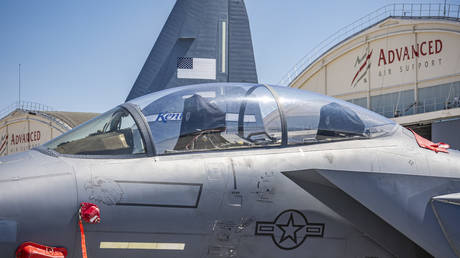
American forces have recovered a crew member from a downed F-15 as clashes with Iranian forces were reported during the operation
Welcome to RT’s live coverage of the US-Israeli war on Iran, a conflict spanning the Middle East in which both sides are exchanging missile and drone strikes across multiple countries.
Iran hit several energy sites in Kuwait, including the headquarters of the Kuwait Petroleum Corporation, which was reportedly struck by a drone. The barrage came after US President Donald Trump warned that “all hell will rain down” on Iran unless the Strait of Hormuz is unblocked within 48 hours.
Iran has closed the vital waterway to “enemy ships” following the first wave of US and Israeli attacks on February 28, driving up oil and gas prices worldwide. Trump has vowed to target Iranian power plants if shipping is not fully restored.
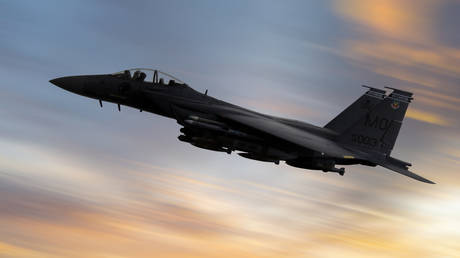
Meanwhile, the United States said it had successfully rescued a crew member of a downed F-15E Strike Eagle during what Trump described as “one of the most daring search and rescue operations in U.S. history.”
The officer, whom Trump identified as a colonel, had been stranded in mountainous terrain inside Iran and was recovered by a large force of aircraft after sustaining injuries. He said the serviceman is now “safe and sound.”
Trump added that a second US pilot had been rescued in a separate operation a day earlier, which had not been disclosed at the time for operational security reasons, and said both missions were carried out without American casualties. The Pentagon has not publicly confirmed details of the operations.
Earlier reports had indicated intense fighting between US commandos and Iran’s Basij paramilitary force in the southwestern province of Kohgiluyeh and Boyer-Ahmad, where the aircraft was shot down on Friday, and that Iranian authorities had offered a reward for the pilot’s capture.
In a separate incident on Friday, a US A-10 Thunderbolt II was hit by Iranian fire, with the pilot ejecting after leaving Iranian airspace and later being rescued, according to US media reports.
Iran’s Atomic Energy Organization condemned the latest US-Israeli strike near the Bushehr nuclear power plant – the fourth since hostilities began – accusing the International Atomic Energy Agency (IAEA) of “inaction” and warning of potential legal action. The projectile hit near the facility’s perimeter, killing a security guard and damaging an auxiliary building.
The IAEA earlier confirmed it had been informed of the incident and reported no rise in radiation levels. Director General Rafael Grossi expressed “deep concern,” warning nuclear sites “must never be attacked,” but did not directly condemn the US or Israel.
Here are the latest developments:
Iran’s central military command rejected Trump’s 48-hour ultimatum. General Ali Abdollahi Aliabadi called it “a helpless, nervous, unbalanced and stupid action.”
Tehran reportedly added “two main power plants” in Israel to its list of targets.
Iranian forces struck a US military radar in the UAE and targeted “command headquarters of mechanized, armored, and helicopter battalions” in Kuwait using Arash-2 drones.
Russian Foreign Ministry spokeswoman Maria Zakharova warned that recent US-Israeli strikes on the Bushehr NPP are pushing the situation toward a “dangerous line.”
At least 17 people were arrested during an anti-war rally in Tel Aviv’s Habima Square.
Follow our live coverage below for continuous updates. You can also read our previous updates here.
from RT World News https://ift.tt/6vfZC1p
via IFTTT https://ift.tt/zPn2JKY
The Yemeni group has said it is entering the battle against the US and Israel in support of Iran and other “resistance” factions
Yemen’s Houthi armed forces announced their formal entry into the conflict in the Middle East, firing several missiles at Israel.
The group, which controls the Yemeni capital Sanaa and much of the country’s north, has stayed out of the action since the US and Israel first attacked Tehran on February 28.
But on Saturday, Houthi military spokesman Brigadier General Yahya Saree issued a statement, declaring support for Tehran and other “resistance” factions in the region.
The group is compelled to begin military operations against the US, Israel and their allies due to ongoing escalation, attacks on infrastructure, and “atrocities” committed in Lebanon, Iran, Iraq and the Gaza Strip, he said.
”Our fingers are on the trigger” if any nation decides to join the strikes by Washington and West Jerusalem or if the Red Sea is used for targeting Iran, Saree warned.
Several hours later, the Houthis said that they had launched “a salvo of ballistic missiles towards sensitive Israeli military sites,” timing the attack with the operations carried out by Iran and Hezbollah in Lebanon.
The group said they will continue its strikes “until the aggression against all resistance fronts ceases.”
Israel reported shooting down two missiles coming from Yemen on Saturday.
When asked about the Houthi attack, Israeli military spokesperson Brigadier General Effie Defrin said that West Jerusalem is “preparing for a multifront war.”
from RT World News https://ift.tt/RyvPekM
via IFTTT https://ift.tt/3mFMAkI
Afghanistan has resisted control for centuries – and Islamabad is no exception
For more than four decades, Pakistan’s approach toward Afghanistan has been guided by a simple assumption – that Afghanistan’s political trajectory must remain aligned with Pakistan’s security interests. From the Soviet war of the 1980s to the rise of the Taliban in the 1990s and again after the Fall of Kabul, Islamabad has sought influence across its western border.
But today, that longstanding policy is unraveling.
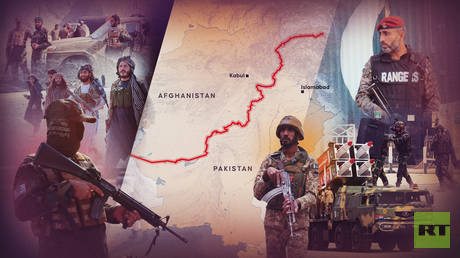
The irony is difficult to ignore. The very militant networks once viewed as useful tools of regional influence have evolved into one of Pakistan’s most serious security threats. Fighters from the Tehrik-i-Taliban Pakistan have intensified attacks inside Pakistan, creating a crisis that Islamabad now argues originates from Afghan territory.
In response, Pakistan has adopted an increasingly aggressive posture toward Afghanistan, including cross border strikes, heightened military activity, and the mass deportation of Afghan refugees. Yet these measures address symptoms rather than causes.
At the heart of the conflict lies a deeper structural problem: Pakistan has never fully accepted the idea of an independent Afghanistan pursuing its own geopolitical interests. For decades, Afghan leaders across political spectrums have resisted Pakistan’s attempts to shape the country’s internal politics. That resistance is rooted not only in nationalism but also in history.
The dispute over the Durand Line remains a powerful symbol of that history. While Pakistan considers the border settled, many Afghans view it as a colonial boundary imposed during the era of the British Empire. For communities divided by the border, fencing and militarization have only deepened resentment.
Pakistan’s strategic establishment also fears encirclement by India and has historically viewed Afghanistan through that lens. The idea of ‘strategic depth’ encouraged the belief that Kabul must remain politically aligned with Islamabad. But the reality of Afghan politics has repeatedly disproven this assumption.
Afghanistan has always resisted external domination, whether from empires, superpowers, or neighboring states.
What Pakistan faces today is the predictable outcome of policies built on short term tactical thinking rather than long term regional stability. Influence achieved through proxies rarely produces sustainable security. Instead, it creates cycles of dependency, mistrust, and blowback.
The path forward requires a fundamental shift in perspective. A stable Afghanistan cannot be manufactured through pressure or coercion. It can only emerge from a relationship based on mutual sovereignty and regional cooperation.
Pakistan’s leaders must recognize a reality that history has already made clear: Afghanistan cannot be controlled.
And the sooner that lesson is accepted, the sooner both countries can begin to build a future defined not by conflict but by coexistence.
from RT World News https://ift.tt/wBZdJ7S
via IFTTT https://ift.tt/7yYSfXx
The US is reportedly weighing additional troop deployments as its naval presence grows around the Strait of Hormuz
US President Donald Trump has ruled out a ceasefire with Iran as the war in the Middle East enters its fourth week, arguing that Washington holds the upper hand militarily.
”I don’t want to do a ceasefire… You know you don’t do a ceasefire when you’re literally obliterating the other side,” Trump told reporters outside the White House on Friday.
He said US strikes had “knocked out everything” – Iran’s navy, air force and air defenses, adding that Tehran was “finished” militarily.
Trump branded NATO allies “cowards” on Friday and warned the bloc was a “paper tiger” without US leadership, urging partners to help reopen the Strait of Hormuz – a key global oil shipping route.
Speaking to reporters later, he downplayed the waterway’s importance for Washington, arguing that countries more dependent on it should take responsibility for restoring flows. “We don’t use that strait directly. The United States doesn’t need it. Europe needs it. Korea, Japan, China — many others,” he said, adding that “at a certain point, it’ll open itself.”
However, US media have reported that American amphibious ships and thousands of Marines are being deployed toward the region as part of a broader military buildup, potentially to reinforce naval operations around the strategic choke point.
Iran’s Supreme Leader Mojtaba Khamenei, marking the Persian New Year of Nowruz, said the country had dealt “a dizzying blow” to its enemies and described the US‑Israeli assault as a “gross miscalculation.” An Iranian military spokesman also warned that “even parks, recreational areas, and tourist destinations anywhere in the world will no longer be safe” for Tehran’s enemies.
Fighting has continued across multiple fronts, with reported US and Israeli strikes in Iran and Lebanon even as millions across the region marked the Muslim celebration Eid al‑Fitr. Iran’s Islamic Revolutionary Guard Corps (IRGC) said it had launched the 70th wave of its ‘True Promise 4’ operation, targeting sites linked to US forces and Israel across Saudi Arabia, the United Arab Emirates, Kuwait, Iraq and Bahrain, as well as areas of northern and central Israel.
Energy markets remain volatile amid disruptions to shipping through the Strait of Hormuz, with Brent crude hovering around $110–112 a barrel after briefly spiking above $115 on Thursday, remaining well above levels seen at the start of March.
Trump suggested that the US would help other countries police the Strait of Hormuz if they answered his call, claiming it would be “an easy” operation.
According to Lloyd’s List, several countries, including India, Pakistan, China, Iraq, and Malaysia are directly discussing the procedures to allow the transit of their ships with Iran.
Israel said it had killed two more senior Iranian commanders, identifying them as Esmail Ahmadi, intelligence chief of the Basij paramilitary force, and Mehdi Rostami Shamastan, a senior Intelligence Ministry official.
Follow our live coverage below for continuous updates. You can also read our previous updates here.
from RT World News https://ift.tt/9e5YylR
via IFTTT https://ift.tt/HKBwRXS
Islamabad’s evolving program could put American cities within range, the intel chief has said
Pakistan’s evolving missile program poses a potential threat to the US, Director of National Intelligence Tulsi Gabbard has said.
She named the South Asian country along with Russia and others in the 2026 Annual Threat Assessment Report.
“Russia, China, North Korea, Iran, and Pakistan have been researching and developing an array of novel, advanced, or traditional missile delivery systems with nuclear and conventional payloads, that put our homeland within range,” Gabbard told the US Senate Intelligence Committee on Wednesday. “Pakistan’s long-range ballistic missile development potentially could include ICBMs with the range capable of striking the homeland.”
Gabbard told the committee that she expects threats to the US to expand collectively from more than 3,000 missiles to more than 16,000 missiles by 2035.
Washington-based scholar Shuja Nawaz told Dawn News that this “continues the analysis of the Biden administration that placed sanctions on Pakistani entities and tried to curb acquisition of new technologies.”
Washington-Islamabad ties have been marked by ups and downs over the past few decades. Pakistan was a US ally in the Cold War era and joined several Washington-led initiatives, including the Southeast Asian Treaty Organization (SEATO) and Central Treaty Organization (CENTO).
The US declared Pakistan a major non-NATO ally in 2004, although it later accused Islamabad of supporting the Afghanistan Taliban and undermining US interests in the war-torn country until 2021.
Earlier this year, Islamabad joined US President Donald Trump’s Board of Peace, which aims to oversee a postwar reconstruction of Gaza.
The South Asian country enjoys a warm relationship with China and has joined President Xi Jinping’s Belt and Road initiative. It is also a full member of the Shanghai Cooperation Organization (SCO).
from RT World News https://ift.tt/DFLluXd
via IFTTT https://ift.tt/LYyEZjI