September 2023 - Tool Boxx

Saturday, September 30, 2023

10 easy ways to prevent someone from spying on you

September 30, 2023 0
10 easy ways to prevent someone from spying on you
https://ift.tt/Y6QCv3n

You know, one of the absolute worst feelings in the world is when you get that creepy sensation that someone is spying on you. It’s just so unsettling, whether it’s happening in real life or online. I mean, seriously, who wants to be watched without their permission, right? 

That’s why it’s important for us to be proactive and take all the necessary steps to protect ourselves. 

Here are my top 10 tips for keeping your information away from those creepy spies

CLICK TO GET KURT’S FREE CYBERGUY NEWSLETTER WITH SECURITY ALERTS, QUICK TIPS, TECH REVIEWS AND EASY HOW-TO’S TO MAKE YOU SMARTER 

1. Have good antivirus software 

You often hear me talking about this and there's a good reason. One of the best ways to protect yourself from being spied on is to have antivirus protection installed on all your devices. Having good antivirus software allows you to be resilient against growing attacks by actively running on your devices. It’s the best to help stop and alert you of any malware in your system, warn you against clicking on any malicious links in phishing emails, and ultimately protect you from being hacked.

See my expert review of the best antivirus protection for your Windows, Mac, Android & iOS devices. 

2. Remove yourself from the internet  

Your personal data can get exposed online in various ways, such as data breaches, data scraping, or data sharing by hackers, websites, platforms or on the dark web. This can put your privacy and security at risk. While no service promises to remove all your data from the internet, having a removal service is great if you want to constantly monitor and automate the process of removing your information from hundreds of sites continuously over a longer period, and it would significantly decrease the chances of someone being able to spy on you all the time.

See my tips and best picks for removing your personal information from the internet  


3. Avoid using apps like Temu 

Certain readily available apps are made to spy on you and harvest your personal data . The Chinese-based app Temu and its sister app Pinduoduo have been found to collect sensitive information on users, including tracking locations, recording contacts, browsing history, and other personal information. 

Before you download any app, make sure you read its privacy policy or, at the very least, search the app name along with the word ‘privacy.’ Closely look at its reviews and ratings, and make sure it's coming from a legitimate official source like the App Store or the Google Play Store. Never link to download an app from an email or text message. Those links often lead to trouble compromising your security. 

MORE: EXPOSING THE SHOCKING TRUTH ABOUT POPULAR APPS WITH CHINESE TIES  

4. Use a VPN  

Consider using a VPN to protect against prying eyes from tracking you and identifying your potential location on websites that you visit. Depending on their privacy settings, many sites can read your IP address and may display the city from which you are corresponding. A VPN will disguise your IP address to show an alternate location. 

For the best VPN software, see my expert review of the best VPNs for browsing the web privately on your Windows, Mac, Android, & iOS devices 

5. Use a webcam cover 

You know those little cameras that you see built into all of your devices? Or the external webcams that you plug into your computer? If your devices become compromised, hackers can gain access to your webcam to spy on you and learn your sensitive information. Covering your webcam with a simple piece of electrical tape or using a physical camera cover is an easy and inexpensive way to take control of your privacy and get some peace of mind. 

Think of it like closing the curtains on your window. Why should anyone have the opportunity to see what you are doing in the comfort of your own home? It is an easy suggestion for everyone that can prevent massive issues.

MORE: IS SOMEONE SPYING ON YOU THROUGH YOUR HACKED WEBCAM? 7 RED FLAGS 

 6. Have strong passwords  

Create strong passwords for your accounts and devices, and avoid using the same password for multiple online accounts. Consider using a password manager to securely store and generate complex passwords instead of relying on a single password, which, if stolen, can expose you. It will help you to create unique and difficult-to-crack passwords that a hacker could never guess.

Plus, it also keeps track of all your passwords in one place and fills passwords in for you when you're logging into an account so that you never have to remember them yourself. The fewer passwords you remember, the less likely you will be to reuse them for your accounts.

GET MORE OF MY TECH TIPS & EASY VIDEO TUTORIALS WITH THE FREE CYBERGUY NEWSLETTER - CLICK HERE 

7. Use 2-factor authentication 

Having 2-factor authentication is just another way to keep those spies out of your accounts. If someone guesses your password, 2-factor authentication will pose another barrier for them to have to break through. This will encourage many hackers to give up on trying and will cause major setbacks for the rest who still try to get into your accounts. 

Many devices offer 2-factor authentication, and it is typically used either through an SMS-text messaging system, an authentication app, or with a fingerprint or facial scan, making it nearly impossible for a hacker to bypass it. If you don't have 2-factor authentication on your devices already, I would highly recommend looking into it.

MORE: WHAT IS TWO-FACTOR AUTHENTICATION, AND SHOULD I ENABLE IT? 

 8. Double-check camera and microphone settings 

Your smartphones, tablets, and computers should have adjustable settings for both your camera and microphone. Oftentimes people don't realize that every app on your device has its own set of permissions, so you might be giving camera and microphone access to an app that you don't want to give access to. These settings can be easily changed, so make sure you're only giving camera and microphone permission where absolutely necessary to avoid any snoopers from looking into your information. There are different ways to manage the camera and microphone permissions on your phone, depending on the app you are using. 

How to adjust your microphone or camera using third-party apps on iPhone 

How to adjust your microphone or camera permissions using Safari on iPhone 

How to adjust your microphone or Camera permissions for all apps on Android 

HOW TO FIGHT BACK AGAINST DEBIT CARD HACKERS WHO ARE AFTER YOUR MONEY

How to adjust your microphone or camera preferences using Chrome on Android 

How to adjust your microphone or camera preferences using Firefox on Android 

Open the Firefox app 

MORE: ARE YOUR OWN DEVICES INADVERTENTLY SPYING ON YOU?  

9. Lock your screens 

If you want to protect against a snoop physically peeking over your shoulder, which happens more often than you might think, then having a lock on your screen is the best way to protect yourself.

You can create passcodes for your smartphones, tablets, or computers, and some devices will also allow you to enable a fingerprint or Face ID lock to prevent snoops from guessing a number passcode.

For step-by-step instructions on how to lock up your screen devices, click here. 

MORE: HOW TO MAKE YOUR DEVICES IMPOSSIBLE TO SNOOP ON WITH A PRIVACY SCREEN 

10. Turn off your location 

Location settings are a key way for hackers and spies to keep tabs on you. The last thing you want is for someone you don't know to have information on where you've been or where you're going. Keeping your location services either completely off or limited, especially on your smartphone, which you take with you everywhere you go, can prevent a hacker from having that information. 

However, before you turn off location sharing to everything on your devices, you need to know the consequences of doing so. That's because several applications use your location services, like location-based apps, which include your map, navigation, photo, weather, and fitness apps. Also, your browser uses your location to provide relevant search results. In addition, emergency services could be affected if you turn off location sharing. In fact, your location may not be automatically shared with emergency services, which could delay response times or make it difficult for emergency personnel to find you.

Kurt's key takeaways 

We all have to be vigilant when it comes to protecting our privacy because these hackers and spies will do anything to get your information from you. I know it can seem scary; however, as long as you take the proper precautions and stay alert at all times, then you can have a safe and enjoyable experience while you're surfing the web. 

What scares you the most when it comes to your online privacy? Are there any specific concerns you have that you'd like us to address? Let us know by writing us at Cyberguy.com/Contact 

For more of my tech tips & security alerts, subscribe to my free CyberGuy Report Newsletter by heading to Cyberguy.com/Newsletter 

Answers to the most asked CyberGuy questions: 

What is the best way to protect your Mac, Windows, iPhone and Android devices from getting hacked? 

What is the best way to stay private, secure, and anonymous while browsing the web? 

How can I get rid of robocalls with apps and data removal services? 

Copyright 2023 CyberGuy.com. All rights reserved. 


from Technology News Articles on Fox News https://ift.tt/1vB6IAH
via IFTTT

How to customize Alexa’s voice, Wake Word and Hunches

September 30, 2023 0
How to customize Alexa’s voice, Wake Word and Hunches
https://ift.tt/7bKGIH9

Ever felt that your smart home assistant's voice doesn't quite match your aesthetic or mood? Well, Alexa is lending an ear to your preferences. There's a charm in personalizing every tiny detail of our gadgets, and Amazon's Alexa isn't one to be left behind.

First up, here's how you can adjust her accent. 

CLICK TO GET KURT’S FREE CYBERGUY NEWSLETTER WITH SECURITY ALERTS, QUICK TIPS, TECH REVIEWS AND EASY HOW-TO’S TO MAKE YOU SMARTER 

MORE: HOW TO SETUP ALEXA FOR EMERGENCIES 

Maybe "Alexa" feels a tad too mainstream for you now. How about waking up your device with a more unique call? There are a few options to choose from, but for this example, we'll go with "Ziggy." 

Just like that, your former Alexa smart speaker is now the Ziggy smart speaker. 

MORE: HOW TO GET ALEXA TO SPEAK MORE LIKE YOU 

Ever felt that Alexa is getting a bit too intuitive? It's understandable, since she can do things for you based on what you usually do, thanks to Alexa Hunches. For instance, when you say, "Goodnight," she will offer to turn off the lights if that's what you usually do, or you can let her act on her hunches without asking you first. So, if her hunches are more eerie than endearing, here's how to switch them off: 

MORE: 3 MUST-DO ALEXA SETTINGS TO MAKE YOUR LIFE EASIER 

At last, Amazon's Alexa has taken a stride toward individuality by allowing us to tailor her accent to match our preferences. From British charm to a unique wake word like "Ziggy," the process is as simple as a few taps in the Alexa app. And for those moments when Alexa’s intuition feels a bit too much, you can now effortlessly turn off Hunches Suggestions, putting you in control of your smart assistant’s behavior once and for all. 

IS ALEXA SECRETLY LISTENING TO YOUR PRIVATE CONVERSATIONS?

If you could give Alexa any new feature, what would it be? Maybe she answers in puns and dad jokes? Or perhaps sings lullabies in an operatic voice? The more creative, the better! Let us know by writing us at Cyberguy.com/Contact 

For more of my tech tips and security alerts, subscribe to my free CyberGuy Report Newsletter by heading to Cyberguy.com/Newsletter

Answers to the most asked CyberGuy questions: 

Copyright 2023 CyberGuy.com. All rights reserved. 


from Technology News Articles on Fox News https://ift.tt/YeLRtaM
via IFTTT

Intel's latest high volume EUV chip production could help it retake the lead in the semiconductor race

September 30, 2023 0

via TechSpot https://ift.tt/bsF1Z2C
The heavy computing requirements of AI push evolving manufacturing processes that shrink overall chip sizes while allowing a higher concentration of compute elements on each chip. As a result, companies like Intel, TSMC, and Samsung are constantly investing in facilities, equipment, and resources to stay one step ahead of the...

Read Entire Article

Atari 2600+ sees its future in retro gaming

September 30, 2023 0
Atari 2600+ sees its future in retro gaming
The Atari home video game system took the late1970s and early 1980s by storm, complete with faux wood paneling and a classic joystick with a big red button. Rival systems eventually surpassed the video-game pioneer but its iconic status, and fans, remained.

from CNN.com - RSS Channel - App Tech Section https://ift.tt/2YDuPvq
via IFTTT

Atari 2600+ sees its future in retro gaming

September 30, 2023 0
Atari 2600+ sees its future in retro gaming
https://ift.tt/bILD9tK
The Atari home video game system took the late1970s and early 1980s by storm, complete with faux wood paneling and a classic joystick with a big red button. Rival systems eventually surpassed the video-game pioneer but its iconic status, and fans, remained.

from CNN.com - RSS Channel - App Tech Section https://ift.tt/0BmeEYc
via IFTTT

Ukraine’s War of Drones Runs Into an Obstacle: China

September 30, 2023 0
Ukraine’s War of Drones Runs Into an Obstacle: China
https://ift.tt/H3bn1x0
As the war with Russia stretches on, so too does a contest to make more and deadlier flying machines. That means a fight over global electronics supply chains that run through China.

from NYT > Technology https://ift.tt/VeQByoS
via IFTTT

Friday, September 29, 2023

ChatGPT can browse the web for answers once again, voice and image recognition are also rolling out

September 29, 2023 0

via TechSpot https://ift.tt/QeP0Kaw
One of ChatGPT's primary shortcomings has been its inability to search the internet to answer queries. OpenAI briefly added the functionality earlier this year but removed it due to unintended consequences. The company has now restored the chatbot's internet access with additional safeguards while introducing speech and image recognition capabilities.

Read Entire Article

The Download: brain bandwidth, and artificial wombs

September 29, 2023 0

via MIT Technology Review https://ift.tt/zAmkBOC

This is today’s edition of The Download, our weekday newsletter that provides a daily dose of what’s going on in the world of technology.

Elon Musk wants more bandwidth between people and machines. Do we need it?

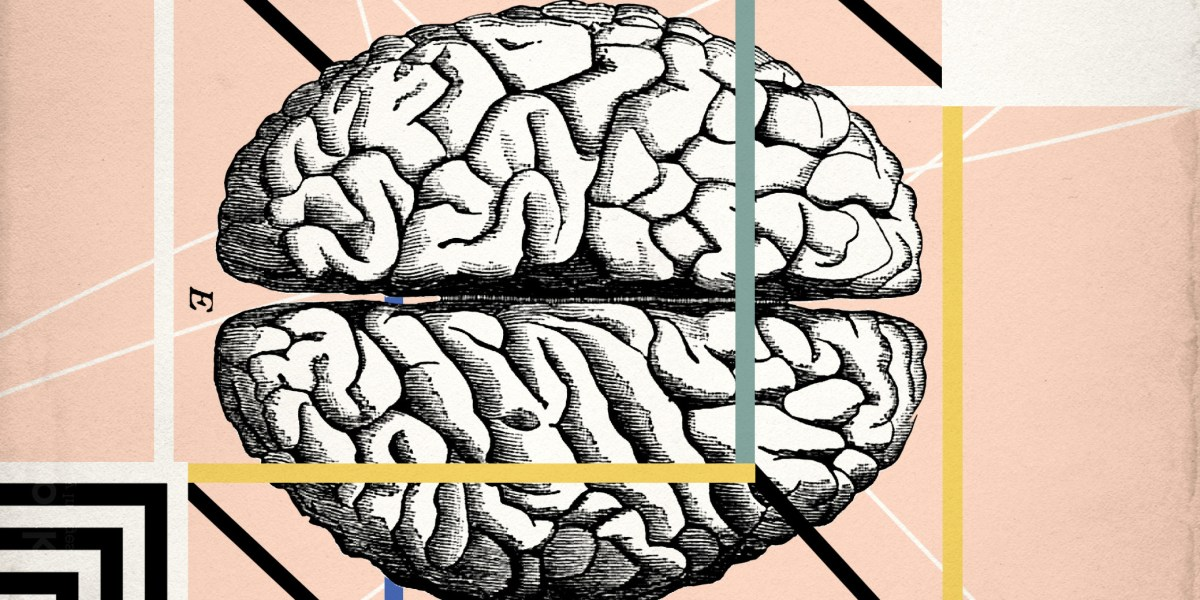
Last week, Elon Musk made the bold assertion that sticking electrodes in people’s heads is going to lead to a huge increase in the rate of data transfer out of, and into, human brains.

The occasion of Musk’s post was the announcement by Neuralink, his brain-computer interface company, that it was officially seeking the first volunteer to receive an implant that contains more than twice the number of electrodes than previous versions to collect more data from more nerve cells.

The entrepreneur mentioned a long-term goal of vastly increasing “bandwidth” between people, or people and machines, by a factor of 1,000 or more. But what does he mean, and is it even possible? Read the full story.

—Antonio Regalado

This story is from The Checkup, MIT Technology Review’s weekly biotech newsletter. Sign up to receive it in your inbox every Thursday.

Everything you need to know about artificial wombs

Earlier this month, US Food and Drug Administration advisors met to discuss how to move research on artificial wombs from animals into humans.

These medical devices are designed to give extremely premature infants a bit more time to develop in a womb-like environment before entering the outside world. They have been tested with hundreds of lambs (and some piglets), but animal models can’t fully predict how the technology will work for humans. 

Regulators are grappling with the question of how much of the unknown is acceptable as this research moves out of the lab and into first-in-human trials. But selecting the right participants will be tricky. Read the full story.

—Cassandra Willyard

The must-reads

I’ve combed the internet to find you today’s most fun/important/scary/fascinating stories about technology.

1 Microsoft suggested that Apple buy Bing in 2020 
The deal would have installed Bing as the iPhone’s default search engine, but it never came to fruition. (Bloomberg $)
+ Microsoft could overtake Apple as the world’s most valuable firm. (Economist $)

2 A jury will decide whether Tesla’s autopilot caused a driver’s death
The plaintiffs claim that Tesla overhyped the system’s capabilities to make it appear more autonomous than it actually is. (WP $)
+ Should a self-driving car kill the baby or the grandma? Depends on where you’re from. (MIT Technology Review)

3 Take a look inside Huawei’s lobbying playbook
Confidential group chats, gifted gadgets, and secret agreements. (NYT $)
+ Meanwhile, Apple met with Chinese officials to forge a friendly agreement. (WSJ $)

4 The US power grid largely avoided blackouts this summer
That’s no guarantee it’ll hold up in the future, though. (Vox)
+ Stitching together the grid will save lives as extreme weather worsens. (MIT Technology Review)

5 Startups are desperate to become chummy with chipmakers 
Access to powerful chips can make or break an enterprise. (The Information $)
+ These simple design rules could turn the chip industry on its head. (MIT Technology Review)

6 Forever chemicals are absolutely everywhere
And even a lawsuit from the US Department of Justice will stop one company from using them. (Bloomberg $)
+ Plastic pollution persists, even in the absence of humans. (Motherboard)

7 Venture capitalists really don’t want to fund women’s health startups
Investors are mostly male, and largely uninterested. (Proto.Life)
+ Why can’t tech fix its gender problem? (MIT Technology Review)

8 What comes after smartphones?
Experts can’t agree on whether the future contains more screens—or none at all. (Inverse)
+ Even seemingly unassailable apps aren’t invincible. (WP $)

9 The world’s oldest active torrent has turned 20 years old
Happy anniversary to The Fanimatrix! (Motherboard

10 Is it time to banish the group chat?
Please, one-on-one texts only from now on. (The Atlantic $)

Quote of the day

“I work at X, he worked at Twitter.” 

—Linda Yaccarino, CEO of X, insists the company’s culture has changed since its former Head of Trust and Safety, Yoel Roth, was driven into hiding after Elon Musk blamelessly accused him of supporting child sexualisation last year, the Verge reports.

The big story

How big science failed to unlock the mysteries of the human brain

August 2021

In September 2011, Columbia University neurobiologist Rafael Yuste and Harvard geneticist George Church made a not-so-modest proposal: to map the activity of the entire human brain.

That knowledge could be harnessed to treat brain disorders like Alzheimer’s, autism, schizophrenia, depression, and traumatic brain injury, and help answer one of the great questions of science: How does the brain bring about consciousness? 

A decade on, the US project has wound down, and the EU project faces its deadline to build a digital brain. So have we begun to unwrap the secrets of the human brain? Or have we spent a decade and billions of dollars chasing a vision that remains as elusive as ever? Read the full story.

—Emily Mullin

We can still have nice things

A place for comfort, fun and distraction in these weird times. (Got any ideas? Drop me a line or tweet ’em at me.)

+ Enjoy this dreamy Stone Roses intro on a Friday morning.
+ You know what doesn’t get enough appreciation? A good pie recipe.
+ Building your own PC may be time-consuming, but it also gives you an enormous sense of wellbeing.
+ Aww, why can’t my emotional support alligator come to the ball game with me? 🐊
+ The prevailing mystery of what trilobites ate has finally been solved: and it sounds pretty tasty.

Nvidia GeForce RTX 4070 vs. RTX 4060 Ti 16GB: Is It Worth Spending the Extra $100?

September 29, 2023 0

Nvidia's offices raided by antitrust enforcers in France

September 29, 2023 0

via TechSpot https://ift.tt/mspr4jK
The Wall Street Journal writes that the French competition authority did not name the location that had been targeted in the dawn raid this week. However, the agency said in a press release that it was "a company suspected of having implemented anticompetitive practices in the graphics cards sector." People...

Read Entire Article

Everything you need to know about artificial wombs

September 29, 2023 0

via MIT Technology Review https://ift.tt/I38txFr

MIT Technology Review Explains: Let our writers untangle the complex, messy world of technology to help you understand what’s coming next. You can read more from the series here.

On September 19, US Food and Drug Administration advisors met to discuss how to move research on artificial wombs from animals into humans. These medical devices are designed to give extremely premature infants a bit more time to develop in a womblike environment before entering the outside world. They have been tested with hundreds of lambs (and some piglets), but animal models can’t fully predict how the technology will work for humans. 

“The most challenging question to answer is how much unknown is acceptable,” said An Massaro, FDA’s lead neonatologist in the Office of Pediatric Therapeutics, at the committee meeting. That’s a question regulators will have to grapple with as this research moves out of the lab and into first-in-human trials.

What is an artificial womb?

An artificial womb is an experimental medical device intended to provide a womblike environment for extremely premature infants. In most of the technologies, the infant would float in a clear “biobag,” surrounded by fluid. The idea is that preemies could spend a few weeks continuing to develop in this device after birth, so that “when they’re transitioned from the device, they’re more capable of surviving and having fewer complications with conventional treatment,” says George Mychaliska, a pediatric surgeon at the University of Michigan.

One of the main limiting factors for survival in extremely premature babies is lung development. Rather than breathing air, babies in an artificial womb would have their lungs filled with lab-made amniotic fluid, that mimics the amniotic fluid they would have hadjust like they would in utero. Neonatologists would insert tubes into blood vessels in the umbilical cord so that the infant’s blood could cycle through an artificial lung to pick up oxygen. 

The device closest to being ready to be tested in humans, called the EXTrauterine Environment for Newborn Development, or EXTEND, encases the baby in a container filled with lab-made amniotic fluid. It was invented by Alan Flake and Marcus Davey at the Children’s Hospital of Philadelphia and is being developed by Vitara Biomedical

Other researchers are working on artificial wombs too, though they’re a bit farther behind. Scientists in Australia and Japan are developing a system very similar to EXTEND. In Europe, the Perinatal Life Support project is working on its own technology. And in Canada, researchers have been testing their version of an artificial womb on piglets. Researchers at the University of Michigan are working on similar technology intended to be used within preemies for whom conventional therapies aren’t likely to work. Rather than floating in fluid, the infants would only have their lungs filled. It’s a system that could be used in existing ICUs with relatively few modifications, so “we believe that that has more clinical applicability,” says Mychaliska,who is leading the project.  

When will this technology be tested in humans?

The technology used in the EXTEND system has been tested on lamb fetuses, about 300 so far, with good results. The lambs can survive and develop inside the sack for three or even four weeks.

To move forward with human testing, the company needs an investigational device exemption from the FDA. At a meeting in June, Flake said Vitara might be ready to request that exemption in September or October. But at the September advisory committee meeting, when Flake was directly asked how far the technology had advanced he declined to answer. He said he could discuss timing with the advisory committee during the portion of the meeting that was closed to the public. To greenlight a trial, FDA officials need to be convinced that babies who try EXTEND are likely to benefit from the system, and that they’ll fare at least as well as babies who receive the current standard of care.

What would the first human tests look like?

The procedure requires a carefully choreographed transfer. First, the baby must be delivered via cesarean section and immediately have tubes inserted into the umbilical cord before being transferred into the fluid-filled container.

The technology would likely be used first on infants born at 22 or 23 weeks who don’t have many other options. “You don’t want to put an infant on this device who would otherwise do well with conventional therapy,” Mychaliska says. At 22 weeks gestation, babies are tiny, often weighing less than a pound. And their lungs are still developing. When researchers looked at babies born between 2013 and 2018, survival among those who were resuscitated at 22 weeks was 30%. That number rose to nearly 56% at 23 weeks. And babies born at that stage who do survive have an increased risk of neurodevelopmental problems, cerebral palsy, mobility problems, hearing impairments, and other disabilities. 

Selecting the right participants will be tricky. Some experts argue that gestational age shouldn’t be the only criteria. One complicating factor is that prognosis varies widely from center to center, and it’s improving as hospitals learn how best to treat these preemies. At the University of Iowa Stead Family Children’s Hospital, for example, survival rates are much higher than average: 64% for babies born at 22 weeks. They’ve even managed to keep a handful of infants born at 21 weeks alive. “These babies are not a hopeless case. They very much can survive. They very much can thrive if you are managing them appropriately,” says Brady Thomas, a neonatologist at Stead. “Are you really going to make that much of a bigger impact by adding in this technology, and what risks might exist to those patients as you’re starting to trial it?”

Prognosis also varies widely from baby to baby depending on a variety of factors. “The girls do better than the boys. The bigger ones do better than the smaller ones,” says Mark Mercurio, a neonatologist and pediatric bioethicist at the Yale School of Medicine. So “how bad does the prognosis with current therapy need to be to justify use of an artificial womb?” That’s a question Mercurio would like to see answered.

What are the risks?

One ever-present concern in the tiniest babies is brain bleeds. “That’s due to a number of factors—a combination of their brain immaturity, and in part associated with the treatment that we provide,” Mychaliska says. Babies in an artificial womb would need to be on a blood thinner to prevent clots from forming where the tubes enter the body. “I believe that places a premature infant at very high risk for brain bleeding,” he says.  

And it’s not just about the baby. To be eligible for EXTEND, infants must be delivered via cesarean section, which puts the pregnant person at higher risk for infection and bleeding. Delivery via a C-section can also have an impact on future pregnancies.  

So if it works, could babies be grown entirely outside the womb?

Not anytime soon. Maybe not ever. In a paper published in 2022, Flake and his colleagues called this scenario “a technically and developmentally naive, yet sensationally speculative, pipe dream.” The problem is twofold. First, fetal development is a carefully choreographed process that relies on chemical communication between the pregnant parent’s body and the fetus. Even if researchers understood all the factors that contribute to fetal development—and they don’t—there’s no guarantee they could recreate those conditions. 

The second issue is size. The artificial womb systems being developed require doctors to insert a small tube into the infant’s umbilical cord to deliver oxygenated blood. The smaller the umbilical cord, the more difficult this becomes.

What are the ethical concerns?

In the near term, there are concerns about how to ensure that researchers are obtaining proper informed consent from parents who may be desperate to save their babies. “This is an issue that comes up with lots of last-chance therapies,” says Vardit Ravitsky, a bioethicist and president of the Hastings Center, a bioethics research institute. 

If the artificial wombs work, more significant questions will come up. When these devices are used to save infants born too soon, “this is obviously potentially a wonderful technology,” Ravitsky says. But as with any technology, other uses might arise. Imagine that a woman wants to terminate a pregnancy at 21 or 22 weeks and this technology is available. How would that impact a woman’s right to choose whether to carry a pregnancy to term? “When we say that a woman has the right to terminate, do we mean the right to physically separate from the fetus? Or do we mean the right not to become a biological mother?” Ravitsky asks.

With the technology at an early stage, that situation might seem far-fetched, but it’s worth thinking about the implications now. Elizabeth Chloe Romanis, who studies health-care law and bioethics at Durham University in the UK, argued at the advisory meeting that “an entity undergoing gestation outside the body is a unique human entity,” one that might have different needs and require different protections. 

The advent of an artificial womb raises all kinds of questions, Ravitsky says: “What’s a fetus, what’s a baby, what’s a newborn, what’s birth, what’s viability?” These questions have ethical implications, but also legal ones. “If we don’t start thinking about it, now we’re going to have lots of blind spots,” she says.  

Elon Musk wants more bandwidth between people and machines. Do we need it?

September 29, 2023 0

via MIT Technology Review https://ift.tt/b9FMQn4

This article first appeared in The Checkup, MIT Technology Review’s weekly biotech newsletter. To receive it in your inbox every Thursday, and read articles like this first, sign up here.

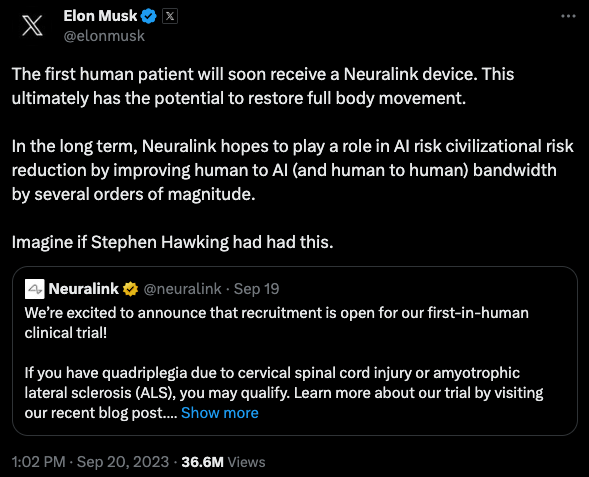
Last week, a post by Elon Musk on X (formerly known as Twitter) caught my eye. The entrepreneur claimed that sticking electrodes in people’s heads is going to lead to a huge increase in the rate of data transfer out of, and into, human brains.

The occasion of Musk’s post was the announcement by Neuralink, his brain-computer interface (BCI) company, that it was officially seeking the first volunteer to receive the “N1,” an implant comprising 1,024 electrodes able to listen in on brain neurons.

This volunteer, the company said, will be someone who has ALS or has been paralyzed due to a spinal cord injury. The point of the experiment is to let them “control external devices with their thoughts”—specifically, move a computer cursor, or control a phone app. There’s little doubt they can do it. Such experiments have been going on for decades.  

One difference is that the N1 device has more than twice the number of electrodes as used in previous implant experiments. More electrodes means Neuralink can collect more data from more nerve cells.

That brings us to to Musk’s post, in which he discussed a long-term goal of vastly increasing “bandwidth” between people, or people and machines, by a factor of 1,000 or more. What did he mean, and, I wondered, is this really possible? Are we talking about some kind of fast telepathy where I could tell you about my day in nanoseconds?

Here’s what his X post said:

Musk post that says

After speaking with a few scientists, I can report to you that the idea that a brain implant can speed up communication between, say, you and me, is largely hogwash. However, speeding up the rate at which machines can read from the brain is very real, and it is key to some cutting-edge uses of mind-reading interfaces, like allowing profoundly paralyzed people to “speak” via a computer.

“Bandwidth” in this case simply refers to a rate of data transfer. Scientists have estimated that humans share information at a speed of around 40 bits per second, no matter what language they use. That’s pretty slow. (A computer download is a million times faster). And there are reasons why it might never speed up. Ever have two people talk to you at the same time? Your ears let the information in, but your brain can’t process it. The speed of thinking itself sets a limit on your bandwidth.

“The idea that we’re going to hook up two people with bits of wire and do better than what you and I can do right now, speaking, is folly,” says Lee Miller, a neuroscientist at Northwestern University who works with brain interfaces. “If that’s the plan, I’m not investing.”

Yet scientists concede there are situations in which faster data transfer could allow a fundamental change in how we express ourselves. Say you’ve been mugged and you want to describe the face of your assailant to a sketch artist. Even though you can picture it clearly, it’s going to take a while for you to communicate those details at your spoken-word rate of 40 bits per second.

Yet, in theory, mental images could be communicated directly between minds. Researchers pointed me to the case of Krista and Tatiana Hogan, twins conjoined at the head who share part of their brains. It’s claimed they can see through one another’s eyes, in effect sharing information coming off the retina into the optic nerve at 10 million bits a second.

In fact, Neuralink has started investigating whether its implant electrodes can stimulate the visual cortex of monkeys. Vision produced in this way is extremely crude—essentially, just a few spots of light—but it could get better with more and more electrodes. One day, it might be possible to transmit a picture between two brains over a cable. 

“Elon thinks a lot about mental imagery, and I believe he’s imagining a future where the image that I’m thinking of could be presented to you, or stimulated directly in your cortex,” says Vikash Gilja, a professor at the University of California, San Diego.

So that’s where more bandwidth could make a difference—not in speeding up speech, but in unexpected forms of thought transfer. It’s also possible, for example, to detect emotional states, like whether a person is depressed, by measuring the brain. Those feelings are not only hard to describe, but you might not even be aware of them.

“I think that there are going to be profoundly interesting things that BCI can read out that people can’t, let’s say, communicate volitionally very easily right now,” says Matt Angle, CEO of Paradromics, a Texas company which has developed its own implant system with around 1,600 electrodes. “Electrodes reading from different brain areas could give access to information that’s not … consciously accessible.”

But let’s return to Earth and the near-term applications of brain-computer interfaces. Do they need more bandwidth? The main use of these devices is to let a paralyzed person operate a computer by moving a cursor with their thoughts. For that, more bandwidth isn’t really required. Scientists can do that by listening in on a few neurons, and adding more will typically bring diminishing returns.

Where collecting more information will be helpful—and where implants with more electrodes will help—is to unlock more natural communication. We saw some of those this year, including when two paralyzed people were able to speak through a computer, using their thoughts.

This works because when the subjects imagine saying words, the electrodes measure their motor neurons, whose firing rate contains information about how they are trying to move their tongue and larynx. From these data it is now possible to determine what words people are thinking of saying with surprising accuracy. Researchers believe that with more electrodes listening to more neurons, and more bandwidth, they’ll get even better at it.

“We don’t need more electrodes for cursor control, but for speech, we are in a regime where data rate matters a lot,” says Angle. “It’s very clear we need to increase the channel count to make those systems viable. With a thousand electrodes, it will be as good as a cell phone transcribing your speech. So in this situation, yes, you’re increasing the information rate by 10 or a hundred times.”

Bottom line: When it comes to enhancing communication between nondisabled people my sources were skeptical that more bandwidth matters. The brain’s going to get in the way. But when it comes to restoring function, it does matter. It takes a lot of neurons—and a lot of data—to get a patient back to communicating at that basic 40 bits a second.

​​Read more from Tech Review’s archive

In 2021, I profiled Dennis DeGray, a paralyzed man who, at that time, was the world record holder for direct brain-to-computer communication. He could type via his thoughts  at 18 words a minute “It’s almost a conversation between the device and myself,” DeGray told me. “It’s a very personal interaction.”

But speed records keep falling. This August, researchers demonstrated that two people who’d lost the ability to speak–one due to a stroke, another because of ALS–were able to quickly utter words through a computer connected to implants placed in their brains. Read the report by Cassandra Willyard here

A few years back, Adam Piore recounted the bizarre tale of Phil Kennedy, a pioneering brain-implant researcher who took the extreme step of getting an implant installed in his own brain. 

From around the web

A second person has received a heart from a gene-modified pig. Lawrence Faucette, a Navy vet with heart failure, underwent transplant surgery on September 20 in Maryland. The previous subject lived two months after the surgery. (Associated Press)

Scientific sleuths are getting better at uncovering rotten research. (WSJ)

Those new generation weight-loss drugs were prescribed to 1.7% of Americans in 2023. And you can expect the market for semaglutide to expand fast. That’s because more than 40% of Americans are obese. (CNN)

Thursday, September 28, 2023

Smartphone market sees worst quarterly performance in over a decade, but Google defies trend

September 28, 2023 0

via TechSpot https://ift.tt/ljb8xLh
The latest Canalys report on the state of the North American smartphone market shows that overall shipments were down 22% in the second quarter. The finger of blame is being pointed at macroeconomic challenges such as rising interest rates and persistent inflation, which have led to a drop in consumer demand.

Read Entire Article

The Download: fusion power’s future, and robotic running

September 28, 2023 0

via MIT Technology Review https://ift.tt/wJsUShc

This is today’s edition of The Download, our weekday newsletter that provides a daily dose of what’s going on in the world of technology.

Why the dream of fusion power isn’t going away

There’s a joke about fusion power that always comes up when people start talking about the technology. It goes like this: Fusion is the energy of the future … and it always will be.

Fusion reactors could someday deliver cheap, abundant power with no carbon emissions. But the promise of “someday” has been around for a long time without payoff. Fusion has generated so much excitement but also so much skepticism. It’s the ultimate long shot in energy technology. 

But despite the massive technical challenges, the promise of fusion’s round-the-clock power with no carbon emissions means that experts say we mustn’t give up on it. Read the full story.

Psst: our climate reporter Casey Crownhart will be discussing the future of long-shot climate technologies like fusion during our second annual ClimateTech conference, taking place at MIT on October 4 and 5. Nab your ticket now!

This story first appeared in The Spark, our weekly climate and energy newsletter. Sign up to receive it in your inbox every Wednesday.

This robotic exoskeleton can help runners sprint faster

What’s happened: A wearable exoskeleton can help runners increase their speed by encouraging them to take more steps, allowing them to cover short distances more quickly, a new study has found.

How it works: The researchers built a lightweight exosuit with steel cables powered by electrical motors attached to the runner’s thighs. The motors pull the cables, mimicking the contraction of muscles. The exosuit helps people run faster by assisting their hip extension—the powerful motion that propels a runner forward.

Big ambitions: Buoyed by their findings, the researchers want to see if their exosuit can help a runner to beat the men’s world record for running 100 meters. They’re working on a customized exosuit for Kyung-soo Oh, a former national elite runner in South Korea who had retired, in a bid to break Usain Bolt’s record of 9.58 seconds. Read the full story.

—Rhiannon Williams

MIT Technology Review flash sale!

It’s the final day of our flash sale, allowing you to subscribe to MIT Technology Review from just $8 a month for digital-only access, or $99 a year for both digital access and to receive our print issues in the post.

Even better, you’ll receive a free copy of our 10 Breakthrough Technologies of 2023 issue as well. Sign up today and save 17% off the full price.

The must-reads

I’ve combed the internet to find you today’s most fun/important/scary/fascinating stories about technology.

1 Meta has released a slew of AI chatbots with famous personas
Paris Hilton and Snoop Dogg-inspired AI chatbots are coming to its apps. (The Verge)
+ Its new conversational chatbot Meta AI is its answer to ChatGPT. (WP $)
+ Meta is confident that private data hasn’t been used to train the model. (Reuters)
+ Chinese AI chatbots want to be your emotional support. (MIT Technology Review)

2 The Hollywood writers’ strike is over
After they managed to secure protections against AI writing scripts. (TechCrunch)
+ Studios can still present writers with AI-generated material, though. (Motherboard)
+ There’s no contracted agreement with the major AI firms in place, either. (Wired $)

3 OpenAI is secretly working on a consumer device 
In conjunction with tech design supremo Jony Ive, no less. (FT $)
+ Hardware for the AI age is an interesting proposition. (The Information $)
+ The inside story of how ChatGPT was built from the people who made it. (MIT Technology Review)

4 Google is increasingly handing over location data to the police
And innocent people’s information is often caught up in the process. (Bloomberg $)

5 X’s CEO Linda Yaccarino says it will make a profit next year
Despite Elon Musk’s recent announcement about a major drop in advertising revenue. (WSJ $)
+ Yaccarino says 90% of its top advertisers have returned. (Bloomberg $)

6 We’re living in the age of the austerity influencer
Money-saving experts hold a huge sway over their budget-conscious audience. (The Guardian)

7 We don’t build cities anymore
But trying to fix the ones we already have isn’t simple, either. (The Atlantic $)
+ The smart city is a perpetually unrealized utopia. (MIT Technology Review)

8 Wikiracing is seriously wholesome
The art of racing between Wikipedia articles in as few clicks as possible is harder than it sounds. (Slate $)

9 Online creators are having an identity crisis
They’ve outgrown their personal brands, but their fans won’t let them change. (Bustle)

10 Scientists are releasing armies of crabs in Florida 🦀
They’re essential to helping save its vulnerable reefs from the ravages of climate change. (Vox)
+ The desperate race to cool the ocean before it’s too late. (MIT Technology Review)

Quote of the day

“I think it’ll be more fun to fight someone who actually fights.” 

—Mark Zuckerberg sets his sights on a match with a more worthy opponent, after his brawl with rival Elon Musk never came to fruition, he tells the Verge

The big story

Uber’s facial recognition is locking Indian drivers out of their accounts

December 2022

One evening in February 2021, Uber driver Niradi Srikanth was getting ready to start his shift ferrying passengers around the Indian city of Hyderabad. He pointed the phone at his face to take a selfie to verify his identity. The process usually worked seamlessly. But this time he was unable to log in.

Srikanth suspected it was because he had recently shaved his head. After further attempts to log in were rejected, Uber informed him that his account had been blocked. He is not alone. 

In a survey conducted by MIT Technology Review of 150 Uber drivers in the country, almost half had been either temporarily or permanently locked out of their accounts because of problems with their selfie. It’s a glitch that can have devastating consequences for affected workers. Read the full story.

—Varsha Bansal

We can still have nice things

A place for comfort, fun and distraction in these weird times. (Got any ideas? Drop me a line or tweet ’em at me.)

+ Acting legend Brian Cox has no time for AI.
+ How Beyoncé’s Renaissance tour captured a sociopolitical moment in time.
+ The ‘90s is well and truly back, and it’s coming for the next generation. ($)
+ It’s time to jam on tiny toy pianos.
+ If you’ve been planning a trip to somewhere as far-flung as possible, these locations are well worth a look.

5 takeaways from America's landmark lawsuit against Amazon

September 28, 2023 0
5 takeaways from America's landmark lawsuit against Amazon
An antitrust lawsuit from 17 states and the Federal Trade Commission this week against Amazon represents the US government's biggest regulatory challenge yet against the e-commerce juggernaut.

from CNN.com - RSS Channel - App Tech Section https://ift.tt/g26OM05
via IFTTT

Counter-Strike 2 now available as a free upgrade from Global Offensive

September 28, 2023 0

via TechSpot https://ift.tt/UsKMbNy
All Counter-Strike: Global Offensive players received an update that replaces the game with Counter-Strike 2 this week. Although CS:GO is no longer available, and the new version completely rebuilds certain elements, Valve stresses a sense of continuity from the experience veterans have known for years.

Read Entire Article

FTC revives attempt to block Microsoft's acquisition of Activision Blizzard

September 28, 2023 0

via TechSpot https://ift.tt/ytP1DiI
In an order issued on Wednesday, the FTC said public interest warrants that the Commission move forward with its adjudicative process related to the deal. This allows a party to settle or contest the charges. If they contest the case, it is heard before an administrative law judge in a...

Read Entire Article

Why the dream of fusion power isn’t going away

September 28, 2023 0

via MIT Technology Review https://ift.tt/VJLoeCp

This article is from The Spark, MIT Technology Review’s weekly climate newsletter. To receive it in your inbox every Wednesday, sign up here.

There’s a joke about fusion power that always comes up when people start talking about the technology. It goes like this: Fusion is the energy of the future … and it always will be.

Fusion reactors could someday deliver cheap, abundant power with no carbon emissions using abundant fuel. But the promise of “someday” has been around for a long time without payoff. I’m fascinated by the way fusion has generated so much excitement and also so much skepticism. It’s the ultimate long shot in energy technology. 

At our ClimateTech event next week, I’ll be chatting with Daniel Brunner, co-founder and chief technology officer of Commonwealth Fusion Systems. So for the newsletter this week, let’s consider the role of long-shot technologies like fusion that could change everything for climate change. 

Promise and perils

Fusion is sometimes referred to as a “moonshot” technology: a lofty goal that would be transformative, but is technically really tough to pull off. 

The original moonshot that popularized the term was literally about the moon—US President John F. Kennedy announced in 1962 a goal of getting to the moon by the end of the decade. (It says something about how long we’ve been waiting for fusion that research on the technology actually predates this first moonshot.)

A fusion reactor slams atoms into each other, causing them to fuse and release vast amounts of energy. The process uses cheap, abundant fuel. That could mean around-the-clock power that doesn’t generate any carbon emissions: a dream combination for addressing climate change. 

But getting this fusion to happen in a controlled way requires multiple feats of science and engineering. Temperatures inside the reactor need to top 100 million °C (180 million °F), and companies have to rely on lasers, super-powerful magnets, or equally high-tech contraptions to hold the fuel in place.

Because of all that complicated engineering, some modelers predict that fusion might not actually turn out to be all that cheap, falling somewhere around or just above the cost of renewables. (Read more in this story from Wired earlier this year.) I see the argument here, but also, forecasters have underestimated the potential of solar panels for over a decade, so I’m not sure I’m ready yet to make a solid argument one way or another about fusion’s eventual cost. 

Regardless, this is a potentially transformative technology. The question is when fusion will be ready for prime time, and if that will be soon enough to do anything about climate change. 

Path and progress

When it comes to future prospects for fusion, I’m watching with interest, excitement, and a healthy serving of skepticism. It’s important to go after long-shot technologies, even if the odds are stacked against any single company or approach working out. 

This feels like an especially positive moment for fusion, because as you might remember, the technology had a huge scientific moment a little less than a year ago. For the first time, scientists at Lawrence Livermore National Laboratory were able to generate more energy from a fusion reaction than what was delivered into the fuel.

With those reactions, fusion reached what’s sometimes called scientific breakeven—a huge milestone by any definition. But, of course, there were caveats. 

The lasers in this reactor are some of the most powerful in the world, but they’re also pretty inefficient. In the end, more power was pulled from the grid than what the fusion reactions produced. And most experts agree that this version of fusion isn’t super practical for power plants, at least in the near term. 

While this was a milestone, it was more symbolic than practical. And it’s notable that in the meantime, the world’s largest and most famous fusion project is languishing—the massive international collaboration ITER (International Thermonuclear Experimental Reactor) has been plagued with delays and exploding costs. 

But amid slow progress from national and international research efforts, the private sector has shown a lot of interest in fusion power. Cumulative investment reached $6.2 billion earlier this year. Investors are still putting money into the technology, with many citing the need for innovative climate technologies and recent progress in the private sector.

While no private fusion company has achieved net energy (or at least, hasn’t announced it), there have been some milestones to mark. Commonwealth Fusion Systems has broken records for magnetic field strength with its new superconductor materials, a technology that could be the key to making fusion work economically at scale. Other startups, like TAE Technologies, have celebrated temperatures of 75 million °C, or even hotter, another key stepping stone to reaching viable fusion reactors. 

I think it’s exciting to see more startups jumping in on fusion energy. There’s a sense of urgency from these companies, because they need to make progress and continue raising money or risk going out of business. 

Commonwealth Fusion Systems plans to flip on its reactor and generate net energy around 2025, and have a plant running in the early 2030s. Helion Energy (which at one point planned to be operational by 2020) is now planning for its plant to come online as early as 2028. The company already has a power purchase agreement in place with Microsoft. 

But experts are skeptical, as my colleague James Temple outlined in his story about Helion’s announced timeline earlier this year.

Potential and prospects

I wouldn’t necessarily bet the planet on fusion, but I don’t think that’s what’s happening.

We have technologies on the table to address climate change right now. For the next decade or so, deploying wind and solar power, electric vehicles, and other available tech will be what helps us reach our emissions goals. 

There’s often a concern that funding fusion will pull money away from the technologies that have a higher chance of having an impact in the near term. But investments aren’t necessarily a zero-sum game. The pot also feels bigger now, with the Inflation Reduction Act in the US putting a half-trillion dollars toward climate technology over the next decade.

It’s possible to acknowledge that existing tech is going to have the biggest impact in the near term while also believing that new technologies, like next-generation batteries, hydrogen-powered heavy industry, and even fusion, could potentially play a massive role in a future version of our world. Having more options on the table come 2030 or even 2040 definitely couldn’t hurt—and while I’m not sure yet which ones those might be, I’m keeping my eyes out. 

If you’re interested to hear more about high-risk, high-reward technologies, be sure to join us at ClimateTech next week—there’s still time to register! In our final session, I’ll be speaking with experts on fusion, large-scale carbon removal, and electric aviation, technologies that could really change everything. Hope to see you there!

Related Reading

Here’s what the first fusion reactor reaching breakeven really means for clean energy.

Commonwealth Fusion Systems thinks its reactor could be the first commercial success for fusion power. My colleague James Temple wrote about the company’s progress when it mostly still looked like a hole in the ground.

Helion claims its first commercial reactor is just five years from startup, but experts have doubts this moonshot will land so soon.

MIT Technology Review has been bringing you the news on fusion for over half a century. Check out a few excerpts on fusion from the archives.

Another thing

The European Commission could be putting the brakes on China’s electric vehicle exports. China’s newfound status as a major auto exporter has raised red flags in Europe, where about 6% of the continent is employed in the domestic auto industry. 

Read more about the fascinating geopolitics of EVs in the latest story from my colleague Zeyi Yang. And if you want to hear more about how China came to dominate the world of EVs, check out his story from February.

Keeping up with climate  

Lego has axed plans to make its iconic bricks from recycled bottles. Using the material required extra steps and more energy, so it didn’t help cut carbon emissions, according to the company. (BBC)

Firefighters have a new tool in the fight against wildfires: AI. The technology can help spot blazes sooner, which could be crucial as climate change makes fires more frequent in some parts of the world. (Bloomberg)

I loved this deep dive about sweat and how climate change is pushing the limits of the human body. (Grist

Long duration energy-storage projects just got a big boost, to the tune of $325 million from the US Department of Energy. This type of technology could be crucial to support renewables on the grid. (Canary Media)

→ Among the winners: Eos and its zinc-based batteries. The company recently received a loan from the DOE for its Pennsylvania factory. (MIT Technology Review)

→ Italian startup Energy Dome also received funding. Learn more about how the company is using compressed carbon dioxide for energy storage in this 2022 story. (MIT Technology Review)

Remember that multibillion-dollar factory Ford was building to produce low-cost EV batteries? It’s on pause. The company cited concerns about being able to competitively operate the plant. Auto workers currently on strike say the move is a veiled threat to cut jobs. (Yahoo)

→ I’ve been following the factory since the company announced plans in February. It could be a big deal for lithium iron phosphate batteries, a low-cost technology. (MIT Technology Review)

There are a lot of potential problems with carbon offsets—businesses and individuals paying for others to reduce emissions on their behalf. This new wide-ranging project from Carbon Brief attempted to round up lots of evidence to this effect. (Carbon Brief

Efforts to cut down on emissions from shipping have had an unintended consequence: heating up the planet. The effect is especially clear in the high-traffic Atlantic Ocean. (Science)

Usually we think of hydrogen as a fuel we need to make, using either fossil fuels or renewable electricity. But there could be more hydrogen resources underground than previously thought. (New Scientist)

Wednesday, September 27, 2023

Apple macOS Sonoma is now available: new interactive widgets and an enhanced focus on gaming

September 27, 2023 0

via TechSpot https://ift.tt/90Kmilv
The widgets are now also more customizable, with users being able to select their on-screen placement. Using Continuity, your iPhone widgets can sync with your Mac when your iPhone is nearby or on the same Wi-Fi network. The widgets are now also interactive, enabling users to "complete a reminder, play...

Read Entire Article

20 Years of Steam: From Half-Life 2 to the Steam Deck

September 27, 2023 0

via TechSpot https://ift.tt/U91mfjQ

Few things are as closely associated with PC gaming as Steam. Microsoft might provide the OS. Intel, AMD, and Nvidia power the most popular gaming hardware. But for most people, Steam is PC gaming.


Read Entire Article

The Download: China’s EV success in Europe, and ClimateTech is coming

September 27, 2023 0

via MIT Technology Review https://ift.tt/vLFrcCK

This is today’s edition of The Download, our weekday newsletter that provides a daily dose of what’s going on in the world of technology.

Meet Europe’s surprising best-selling Chinese EV maker

China’s electric vehicle sector has been lavished with fame and attention. But its global ambitions hit a roadblock this month when the European Commission launched an investigation into whether Chinese-made EVs benefit from excessive government subsidies. 

If the inquiry finds evidence for this claim, which experts say is very likely, it could result in increased import duties for Chinese-made EVs, which would likely make them less competitive in European markets. 

Many of the Chinese brands that are causing concern are well-known names in China, like the established giant BYD and the promising startup Nio. But there’s one name in the mix you might not expect—former British luxury sports car maker MG. Read the full story.

—Zeyi Yang

Zeyi’s story is from China Report, MIT Technology Review’s weekly newsletter giving you the inside track on all things happening in tech in China. Sign up to receive it in your inbox every Tuesday.

If you’re interested in reading more about China’s car sector, why not check out:

+ Europe is about to crack down on Chinese electric cars. The European Commission is set to launch an anti-subsidy investigation into Chinese automakers. Here’s what you need to know about the likely impact.

+ From generous government subsidies to support for lithium batteries, here’s how China managed to build a world-leading industry in electric vehicles.

+ China’s car companies are turning into tech companies. China has already won the race to electrify its vehicles. Now it’s pushing ahead and adding more features and services to attract new customers. Read the full story.

+ A race for autopilot dominance is giving China the edge in autonomous driving. Electric vehicle makers and AI companies are taking Tesla FSD-like systems to China, but it’s still out of reach for most consumers. Read the full story.

ClimateTech is coming

How can we build a sustainable, greener future? Next week, MIT Technology Review is holding our second annual ClimateTech conference to discuss the innovations accelerating the transition to a green economy.

ClimateTech is taking place at the MIT Media Lab on MIT’s campus in Cambridge, Massachusetts, on October 4-5. You can register for the event and either attend in-person or online, here—before it’s too late!

MIT Technology Review flash sale!

If you haven’t already, you can subscribe to MIT Technology Review to read more of our incisive reporting. We’re holding a flash sale for just 48 hours, allowing you to subscribe from just $8 a month.

Even better, you’ll receive a free print copy of our 10 Breakthrough Technologies of 2023 issue as well. Sign up today and save 17% off the full price.

The must-reads

I’ve combed the internet to find you today’s most fun/important/scary/fascinating stories about technology.

1 Amazon is being sued by the FTC in a landmark monopoly case
It’s accused of using illegal tactics to stifle online competition. (Wired $)
+ Head honcho Andy Jassy is facing an uphill climb. (NYT $)
+ The Federal Trade Commission avoided calling to break Amazon up. (Bloomberg $)

2 OpenAI is seeking a new valuation
To the tune of between $80 billion and $90 billion, to be exact. (WSJ $)
+ ChatGPT is about to revolutionize the economy. We need to decide what that looks like. (MIT Technology Review)

3 An astronaut has touched down on Earth after 371 days in space
That’s a new US record. (CBS News)
+ Traveling to space should teach us how to better accommodate disabled people. (Wired $)

4 Linda Yaccarino’s first 100 days at X have been a wild ride
Forget pressure from advertisers: managing Elon Musk is her biggest challenge. (FT $)
+ X appears to have disabled an election misinformation reporting measure. (Reuters)

5 YouTube rewarded a creator who livestreamed attacks on Indian Muslims
Hindu nationalist Monu Manesar has been linked to multiple killings this year. (WP $)

6 Microsoft wants to use nuclear energy to power its AI data centers
It’s looking to nuclear fission to keep those expensive centers ticking over. (CNBC)
+ We were promised smaller nuclear reactors. Where are they? (MIT Technology Review)

7 Maybe we didn’t need to learn to code after all
Generative AI is making it easier than ever to write code, even if it’s far from perfect. (The Atlantic $)
+ Learning to code isn’t enough. (MIT Technology Review)

8 Inside China’s brave online feminist revolution
The country’s burgeoning women’s rights movement is fighting back against a conservative society. (Rest of World)

9 Attempting to reverse your age is the preserve of the ultra-rich
Now they’re competing to win the ‘Rejuvenation Olympics.’ (Vox)
+ Eating fewer calories could help. (Economist $)
+ I just met the founders of a would-be longevity state. (MIT Technology Review)

10 Japan’s female rickshaw pullers are online celebrities 
Social media has helped to drive an influx of female recruits. (Reuters)

Quote of the day

“Sellers pay. Shoppers get lower-quality search results for higher-priced products. Only Amazon wins.”

—The US Federal Trade Commision spells out its case accusing the e-commerce giant of unfair shopping practices, 404 Media reports.

The big story

Novel lithium-metal batteries will drive the switch to electric cars

February 2021

For all the hype and hope around electric vehicles, they still make up only about 2% of new car sales in the US, and just a little more globally. 

For many buyers, they’re simply too expensive, their range is too limited, and charging them isn’t nearly as quick and convenient as refueling at the pump. All these limitations have to do with the lithium-ion batteries that power the vehicles. 

But QuantumScape, a Silicon Valley startup is working on a new type of battery that could finally make electric cars as convenient and cheap as gas ones. Read the full story.

—James Temple

We can still have nice things

A place for comfort, fun and distraction in these weird times. (Got any ideas? Drop me a line or tweet ’em at me.)

+ Are America’s distinctive accents really dying out? Better ask Dolly Parton.
+ Lenny Kravitz’s gigantic scarf is back! 🧣
+ Trying to find the perfect time for a bathroom break during a movie? There’s an app for that.
+ On this day in 1964, the Beach Boys appeared on the Ed Sullivan Show performing this absolute tune.
+ This particular kind of jellyfish may not have a brain, but that doesn’t stop it from learning.