from CNN.com - RSS Channel - App Tech Section https://ift.tt/jaNkwf4
via IFTTT
An artificial intelligence arms race between countries and corporations to see who can develop the most powerful AI machines could create an existential threat to humanity, the co-founder of an AI safety nonprofit told Fox News.
"AI could pose the risk of extinction, and part of the reason for this is because we're currently locked in an AI arms race," Center for AI Safety Executive Director Dan Hendrycks said. "We're building increasingly powerful technologies, and we don't know how to completely control them or understand them."
"We did the same with nuclear weapons," he continued. "We're all in the same boat with respect to existential risk and the risk of extinction."
WATCH MORE FOX NEWS DIGITAL ORIGINALS HERE
Hendrycks' firm released a statement Tuesday warning that "[m]itigating the risk of extinction from AI should be a global priority alongside other societal-scale risks such as pandemics and nuclear war." Many top AI researchers, developers and executives such as OpenAI CEO Sam Altman and "the Godfather of AI," Geoffrey Hinton, signed the statement.
Altman recently advocated for the government to regulate AI in testimony before Congress "to mitigate" risks the technology poses.
"I'm concerned about AI development being a relatively uncontrolled process, and the AIs end up getting more influence in society because they're so good at automating things," Hendrycks, who also signed his organization's statement, told Fox News. "They are competing with each other and there's this ecosystem of agents that are running a lot of the operations, and we might lose control of that process."
"That could make us like a second-class species or go the way of the Neanderthals," he continued.
MILLIONS OF FAST FOOD WORKERS COULD LOSE THEIR JOBS WITHIN 5 YEARS. HERE'S WHY
Tesla CEO Elon Musk has been outspoken about potential AI threats, saying the technology could lead to "civilizational destruction" or election interference. Musk also signed a letter in March advocating for the pause of large AI experiments.
However, the letter failed to prompt large AI developers such as OpenAI, Microsoft and Google to suspended experiments.
"We're having an AI arms race that could potentially bring us to the brink of catastrophe as the nuclear arms race did," Hendrycks said. "So that means we need a global prioritization of this issue."
But the organizations that create the world's most powerful AI systems don't have incentives to slow or pause developments, Hendrycks warned. The Center for AI Safety hopes its statement will inform people that AI poses a credible and important risk.
"Now hopefully we can get the conversation started so that it can be addressed like those other global priorities, like international agreements or regulation," Hendrycks told Fox News. "We need to treat this as a larger priority, a social priority and a technical priority, to reduce these risks."
To watch the full interview with Hendrycks, click here.

This article is from The Technocrat, MIT Technology Review’s weekly tech policy newsletter about power, politics, and Silicon Valley. To receive it in your inbox every Friday, sign up here.
Recently, I drove from Washington, DC, to New York and passed through Maryland, Delaware, and New Jersey on the way while scrolling through Instagram, TikTok, and Twitter. Crossing all those state lines got me thinking about Montana and its recent ban on TikTok, the massive social media app owned by Chinese tech giant ByteDance.
Are we really proceeding down a path where I might have to delete and re-download certain apps as I cross state lines? What is the future of TikTok bans, and could they ever actually be enforced?
US policymakers have been scrutinizing the app intensely in recent months over concerns about Chinese espionage, but Montana’s ban is the most dramatic move so far. Legislators structured the law to target marketplaces like Google Play and Apple’s App Store. Starting on January 1, 2024, those companies could face a fine of $10,000 per day if they make TikTok available to users in Montana.
A lot of pundits, politicians, and technologists have written off the ban as ridiculous, unconstitutional, and xenophobic. And it’s already seeing legal challenges. On Monday, TikTok filed a lawsuit against Montana following a suit from a group of users, citing Constitutional grounds.
Eric Goldman, a law professor at Santa Clara University and co-director of the law school’s High Tech Law Institute, told me that he doubts the bans are anything more than a political play, intended to deliver a message: “It’s just propaganda, not actually an effort to keep Montanans safe.”
There is still really no evidence that TikTok is handing over user data to the Chinese government on the scale that US politicians are claiming. But proposed TikTok bans are cropping up all over the US with mostly bipartisan support, and President Biden has threatened a national ban as well. It’s also not the first time US lawmakers have pushed a TikTok backlash; in 2020, the Trump administration tried to ban the app but was blocked after a judge determined there wasn’t enough evidence of Chinese spying.
As for its enforceability, what would happen if Montana’s ban did go into effect? Would I have to delete the app if I went to visit Glacier National Park? That’s not at all likely, and the current law looks to cut off access to the app at the point of initial download—not for people who already have it on their phones.
Some Montana TikTokers have already started lamenting the potential loss of their platforms and communities on the app, but they might not need to worry too much, as the law also doesn’t directly threaten to punish TikTok users.
Removing TikTok from app stores would significantly reduce its ability to gain new users, and the stores would be tasked with policing access according to device location. TechNet, a lobby group that represents Apple and Google, says that enforcement of such a policy is currently impossible as the stores don’t have the ability to “geofence” by state.
Goldman says Montana lawmakers likely never intended to craft a truly enforceable bill. “They pass bills that aren’t likely to ever work, but they’re not intended for that purpose. They’re intended to show that the legislatures care about certain constituents,” he said. Governor Greg Gianforte hasn’t replied to my questions.
Montana’s ban seems unlikely to survive all the legal challenges, but we might see similar bills pass in other states, which is even more interesting within the broader context of how internet speech regulation is playing out in the US. State legislatures influence each other and serve as laboratories for the national political strategies of both parties. And right now, everyone is experimenting with how to increase limitations on social media and the harm it can do, especially in the absence of national internet speech and privacy laws.
I’ve recently written about the wave of child online safety bills, efforts to censor abortion information by targeting internet service providers that host relevant websites, and the fragmented patchwork of state-based laws that we’re creating in the US. Many of these sorts of bills, like the TikTok ban, are highly politicized and unlikely to survive judicial review, but they drain effort, money, and attention from productive national conversations about how to make the internet a safe, open space.
The ACLU of Montana and other free-speech organizations have come out in opposition of the ban. Keegan Medrano, policy director at the ACLU of Montana, said in a statement, “We will never trade our First Amendment rights for cheap political points.”
Ultimately, that seems like the real danger posed by experimenting with these bans—that politics is encroaching on policymaking. It’s a tale as old as time. Unfortunately for us, this era of junk internet bills seems here to stay.
We’re starting to learn a bit about the mess of online mis- and disinformation around covid-19 vaccines over the past few years. A new study from researchers at the University of Texas at Austin found that some efforts to combat bad information were effective. Exposure to good information did more to change people’s minds than direct rebuttals, which could actually backfire and make people less likely to take the vaccine. The expertise and trustworthiness of the information source were also important factors, and the researchers found that doctors were effective messengers.
Hold the phone – literally. The latest craze sweeping Generation Z isn't a cutting-edge gadget with a gazillion apps – it's the good old-fashioned flip phone. This begs the question, could the kids be yearning for simpler times, or are they just fed up with their smartphones?
You might say flip phones are the little engine that could. Just when we thought they were long gone, they're flipping back into our lives, and who's leading the charge? Gen Z, of course. They've discovered the benefits of a phone that doesn't bombard them with notifications and are not shy about showing it off. In a world of sleek, shiny smartphones, these retro gadgets stand out like a sore thumb – a very fashionable sore thumb, that is.
HOW TO UNCOVER YOUR HOME'S HISTORY WITH HIDDEN GOOGLE MAPS TOOL
MORE: HOW TO SCRUB YOURSELF OFF THE INTERNET
Let's not forget the power of nostalgia. Sure, these flip phones might not boast the latest features or take the sharpest photos, but they're a ticket to a time when life was sure simpler. Maybe Gen Z is on to something here – less is more, and there's something endearing about flipping open a phone to answer a call like it's straight out of a '90s sitcom.
DON’T FALL FOR THAT 'LOOK WHO DIED' FACEBOOK MESSAGE TRAP
So, what happens when a generation starts to flip for flip phones? We might just see a change in how we interact with our gadgets. Perhaps we'll be less tethered to our screens and more present in our daily lives. And who knows? Choosing a more durable, low-tech option might even be better for the environment in the long run.
MORE: HOW TO FIND YOUR LOST IPHONE
Even the big dogs in the tech world can't ignore this flip phone frenzy. Samsung, Nokia and Motorola are dialing up their efforts to release new versions of their classic flip phone models, hoping to cash in on the simplicity that Gen Z craves.
Samsung, known for its high-tech gadgets, isn't shying away from embracing the retro vibe. They've released the Samsung Galaxy Folder 2, a flip phone that dials back on the smartphone features. Its tactile keypad, basic camera and compact design offer users the simplicity and nostalgia of a flip phone without the overwhelming bells and whistles of a modern smartphone.
6 MUST-HAVE APPS TO AMP UP YOUR NEXT PARTY
Nokia, the brand synonymous with sturdiness, is also hopping on the flip phone bandwagon with the Nokia 2720 V Flip. This model is perfect for Gen Z users who crave a no-frills phone experience. With a user-friendly interface, 4G connectivity, and essential apps like WhatsApp and Facebook, the Nokia 2720 V Flip strikes a balance between minimalism and modern communication needs.
WAS YOUR PRIVATE DATA BEING SOLD ON THIS DARK WEB MARKETPLACE?
Motorola, the pioneer of the original Razr, is paying homage to its roots with the Motorola Tundra VA76r. This rugged flip phone is designed to withstand the elements and caters to those who value durability and reliability above all else. With basic call and text functionality, a simple camera, and GPS capabilities, the Tundra VA76r is perfect for those who want a flip phone that can keep up with their active lifestyles.
CREEPY NEW VOICE CLONING COMING TO IPHONE
These tech giants are proving that sometimes, less is more. By tapping into nostalgia and simplicity,, they're offering various flip phone options for users who want to break free from the distractions of a feature-packed smartphone.
DO THIS BEFORE YOU EVER THROW THAT OLD ANDROID PHONE AWAY
Who knows how long this blast from the past will last? For now, it seems that flip phones are making a comeback – and they're doing it in style. Gen Z's love affair with these throwback devices reminds us that sometimes, looking back can help us move forward. In the ever-evolving world of technology, maybe it's time for us to flip the script, too.
Copyright 2023 CyberGuy.com. All rights reserved.
We've all experienced it before – you end up subscribing to a service that you think you're going to use regularly, and a couple of months later, you forget all about it. Why should you keep paying for something that you don't even use? The answer is that you shouldn't. And I've got tips for keeping track of all your subscriptions.
There are subscription tracking programs out there that can analyze your spending and figure out where you're spending your money each month. One service I recommend is called Trim.
This program can do all the work for you and let you know where your money is going. It helps you cancel old subscriptions and can even negotiate bills like your cable or internet bills to help you pay a lower rate. Trim helps you save an average of $213 per year, and it's completely free to sign up. And the best part, Trim uses 256-bit SSL encryption and two-factor authentication to keep your data safe, just like most major banks.
Trim also is mostly free. You have access to many features of Trim at no cost to you. If you enroll in the most popular feature, bill negotiation, they will charge you 15% of the total first year of savings, and you won't be charged at all if they don't save you money. Here's how to start using Trim.
GOT AN IPHONE? DON’T WAIT ANOTHER SECOND TO UPDATE CRITICAL PRIVACY SETTINGS
iPhone 4.4 stars (at time of publishing)
Android: 4.4 stars (at time of publishing)
Rocket Money is another great subscription tracking service. It identifies your subscriptions to help you stop paying for things you no longer need. You can view all your subscriptions on one screen, which will help you both to cancel what you know you don't need and also stay on top of those upcoming bills. Plus, the app is available both for iPhone and Android phones. At the time of publishing, the app had 4.4 stars on both the Apple App and Google Play Stores.
HUNDREDS OF BANKING APPS AT RISK FROM THE NEW NEXUS ANDROID TROJAN
You can also check your subscriptions within your phone's App Store, whether you have an iPhone or an Android. A majority of subscriptions you pay for using your smartphone are kept on file. Here's how to check your subscriptions on your smartphone.
On an iPhone:
On an Android:
Now you know how to save money by effectively managing your subscriptions with services like Trim and Rocket Money, or by checking your phone's app store for active subscriptions that you can cancel.
Copyright 2023 CyberGuy.com. All rights reserved.
The so-called "godfather of AI" continues to warn about the dangers of artificial intelligence weeks after he quit his job at Google.
In a recent interview with NPR, Geoffrey Hinton said there was a "serious danger that we'll get things smarter than us fairly soon and that these things might get bad motives and take control."
He asserted that politicians and industry leaders need to think about what to do regarding that issue right now.
No longer science fiction, Hinton cautioned that technological advancements are a serious problem that is probably going to arrive very soon.
BIDEN EDUCATION DEPARTMENT WORRIED AI IN THE CLASSROOM MIGHT BE USED TO SPY ON TEACHERS
For example, he told the outlet the world might not be far away from artificial general intelligence, which has the ability to understand or learn any intellectual task that a human can.
"And, I thought for a long time that we were like 30 to 50 years away from that," he noted. "Now, I think we may be much closer. Maybe only five years away from that."
While some people have compared chatbots like OpenAI's ChatGPT to autocomplete, Hinton said the AI was trained to understand – and it does.
"Well, I'm not saying it's sentient. But, I'm not saying it's not sentient either," he told NPR.
"They can certainly think and they can certainly understand things," he continued. "And, some people by sentient mean, ‘Does it have subjective experience?’ I think if we bring in the issue of subjective experience, it just clouds the whole issue and you get involved in all sorts of things that are sort of semi-religious about what people are like. So, let's avoid that."
SCIENTISTS USE AI TO FIND DRUG THAT KILLS BACTERIA RESPONSIBLE FOR MANY DRUG-RESISTANT INFECTIONS
He said he was "unnerved" by how smart Google's PaLM model had gotten, noting that it understood jokes and why they were funny.
Google has since released PaLM 2, the next-generation large language model with "improved multilingual, reasoning and coding capabilities."
With the release of such AI swirls fears regarding job replacement, political disputes and the spread of disinformation due to AI.
While some leaders – including Elon Musk, who has his own stake in the AI sphere – had signed an open letter to "immediately pause for at least six months the training of AI systems more powerful than GPT-4," Hinton does not think it's feasible to stop the research.
"The research will happen in China if it doesn't happen here," he explained.
He highlighted that there would be many benefits to AI and asserted that leaders need to put a lot of resources and effort into seeing if it's possible to "keep control even when they're smarter than us."
"All I want to do is just sound the alarm about the existential threat," he said, noting that others had been written off "as being slightly crazy."
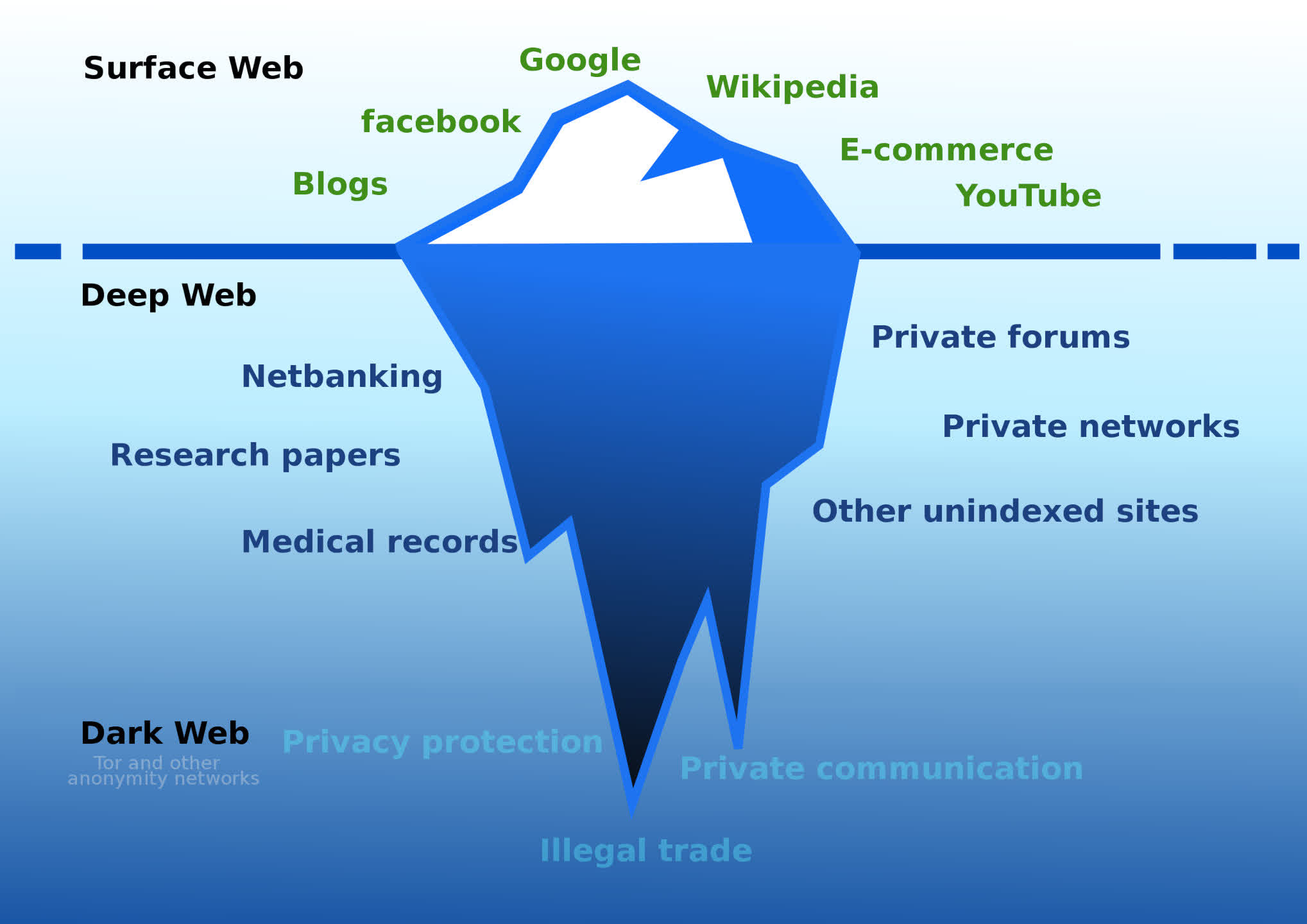
There are few things as infamous as The Dark Web in the world of technology, but what is it, and why does it have such a bad reputation?
In this era of hyper-personalized technology, Apple's making a leap from responding to your voice to mimicking it. Picture this: you're lounging on your couch, half-watching "The Crown," half-scrolling through your endless emails, and then you hear it, a FaceTime call ringing in.
A voice from your friend that sounds just like them greets you. It's as if you've stepped into an episode of "Black Mirror" when you realize it's a cloned voice you’re hearing.
Welcome to iOS 17, where your iPhone and iPad will sound exactly like you when a new feature called Personal Voice is set up and enabled. Something straight out of a sci-fi novel, right? It only takes personal voice 15 minutes to clone your voice – quicker than it takes to whip up a good grilled cheese sandwich and a bowl of tomato soup.
Once your voice is securely stored on your device, it can be used with another new feature called Live Speech. In essence, you, a family member or friend could be on a phone or FaceTime call typing to say something using Live Speech which takes typed text and converts it in real-time to your own cloned voice. Instead of reading what you are typing, Live Speech would speak in your own synthetic voice to someone on the receiving end.
MOVE OVER SIRI - APPLE’S NEW AUDIOBOOK AI VOICE SOUNDS LIKE A HUMAN
Now, let's put the "creepy cool" aspect aside for a moment. Apple's intent behind this seemingly futuristic feature is to enhance accessibility to those who may be losing their voice. The idea is that we'll connect and respond better to someone's own voice or a familiar one. It's like having a digital version of yourself when you hear it.
For some people, especially those with speech difficulties, or people diagnosed with ALS who may one day be challenged with losing their voice, being able to speak by typing and hearing their familiar voice could bring comfort and ease that a generic voice or deciphering text just couldn't match.
5 AMAZING SIRI HACKS YOU'LL WANT TO USE ALL THE TIME
Let's face it though, this could be a bit unnerving for the rest of us at first. Imagine hearing your voice, clear and crisp (and maybe slightly better enunciated than you remember), echoing from your phone. It might just feel like a clone of yourself has taken over, or worse, you're starting to lose it. Instead, it's a breakthrough voice cloning tool to help those who may no longer be able to easily to speak aloud their own words in the future.
Yet, like it or not, we are diving headfirst into this high-tech era where our devices aren't just smart; they're turning into our digital doppelgängers. They know our habits, our favorite songs, our preferred restaurants, and now, they're starting to sound like us. It's safe to say our smartphones may one day know us better than we know ourselves - for better or worse.
The future is knocking, folks, and it sounds suspiciously like us.
Are you ready to distinguish between a real versus cloned voice of someone you know? Will this uncanny familiarity bring comfort to others when you lose your regular voice or be seen as weirdness from those unfamiliar with this new breakthrough voice technology? Let us know, we'd love to hear from you by writing us at Cyberguy.com/Contact.
For more of my tips, subscribe to my free CyberGuy Report Newsletter by heading to CyberGuy.com/Newsletter.
Copyright 2023 CyberGuy.com. All rights reserved.
Correction: A previous version of this story incorrectly referred to Siri being a part of Personal Voice and has been updated to address the inaccuracy.

This is today’s edition of The Download, our weekday newsletter that provides a daily dose of what’s going on in the world of technology.
A brain implant changed her life. Then it was removed against her will.
Sticking an electrode inside a person’s brain can do more than treat a disease. Take the case of Rita Leggett, an Australian woman whose experimental brain implant designed to help people with epilepsy changed her sense of agency and self.
Leggett told researchers that she “became one” with her device. It helped her to control the unpredictable, violent seizures she routinely experienced, and allowed her to take charge of her own life. So she was devastated when, two years later, she was told she had to remove the implant because the company that made it had gone bust.
The removal of this implant, and others like it, might represent a breach of human rights, ethicists say in a paper published earlier this month. And the issue will only become more pressing as the brain implant market grows in the coming years and more people receive devices like Leggett’s. Read the full story.
—Jessica Hamzelou
You can read more about what happens to patients when their life-changing brain implants are removed against their wishes in the latest issue of The Checkup, Jessica’s weekly newsletter giving you the inside track on all things biotech. Sign up to receive it in your inbox every Thursday.
If you’d like to read more about brain implants, why not check out:
+ Brain waves can tell us how much pain someone is in. The research could open doors for personalized brain therapies to target and treat the worst kinds of chronic pain. Read the full story.
+ An ALS patient set a record for communicating via a brain implant. Brain interfaces could let paralyzed people speak at almost normal speeds. Read the full story.
+ Here’s how personalized brain stimulation could treat depression. Implants that track and optimize our brain activity are on the way. Read the full story.
The must-reads
I’ve combed the internet to find you today’s most fun/important/scary/fascinating stories about technology.
1 Chipmaker Nvidia is hurtling towards a trillion dollar valuation
The AI boom has sent the company’s value skyrocketing. (WP $)
+ It’s gaining ground on the likes of Apple and Microsoft. (FT $)
+ But Nvidia is still reliant on third parties to actually manufacture its chips. (WSJ $)
+ These simple design rules could turn the chip industry on its head. (MIT Technology Review)
2 Neuralink has FDA approval to study brain implants in humans
But the company is still under investigation for how it conducted trials in animals. (Reuters)
+ The agency refused Neuralink permission to start testing in humans last year. (WP $)
+ Elon Musk’s Neuralink is neuroscience theater. (MIT Technology Review)
3 North and South Korea are locked in a new space race
They want to use spy satellites to gain an edge on each other. (WSJ $)
4 The success of mRNA vaccines could pave the way for cancer jabs
But experts are, understandably, still treading very cautiously. (Knowable Magazine)
+ What’s next for mRNA vaccines. (MIT Technology Review)
5 Deep sea mining is threatening newly-discovered species
It could devastate the precious eco-systems before we have the opportunity to protect them. (Motherboard)
6 US authorities are demanding Big Tech hands over migrant data
But we don’t know how often the platforms comply with the subpoenas. (The Guardian)
7 Our organs are aging at different rates
Aging clocks can help us to keep an eye on our deterioration—but they don’t always provide a full picture of health. (Proto.Life)+ A test told me my brain and liver are older than they should be. (MIT Technology Review)
8 How the internet birthed a new pan-Asian beauty ideal
And erased facial asymmetry along the way. (Wired $)
+ The fight for “Instagram face” (MIT Technology Review)
9 Sergey Brin’s not giving up on his airship dreams
It’s been a passion project for years—but costs are mounting. (Bloomberg $)
10 It’s time to break free from push notifications 
They’re intrusive and annoying, so why not get rid? (The Atlantic $)
Quote of the day
“There will be an awful lot of losing lottery tickets.”
—Trevor Greetham, an investment strategist at Royal London Investment Management, tells Reuters why investors rushing to make a quick buck on AI-themed stocks would do well to remember the lessons of the dotcom crash.
The big story
Yann LeCun has a bold new vision for the future of AI

June 2022
Around a year and a half ago, Yann LeCun realized he had it wrong.
LeCun, who is chief scientist at Meta’s AI lab and a professor at New York University, is one of the most influential AI researchers in the world. He had been trying to give machines a basic grasp of how the world works—a kind of common sense—by training neural networks to predict what was going to happen next in video clips of everyday events. But guessing future frames of a video pixel by pixel was just too complex. He hit a wall.
Now, after months figuring out what was missing, he has a bold new vision for the next generation of AI, which he thinks will one day give machines the common sense they need to navigate the world. But his vision is far from comprehensive; indeed, it may raise more questions than it answers. Read the full story.
—Melissa Heikkilä & Will Douglas Heaven
We can still have nice things
A place for comfort, fun and distraction in these weird times. (Got any ideas? Drop me a line or tweet ’em at me.)
+ These sped-up penguins are adorable.
+ Wow, Sgt. Pepper’s Lonely Hearts Club Band was released on this day in 1967.
+ At last, my life-long dream of playing Tetris on a chicken nugget is about to be realized—if I can make it to a McDonalds in China, that is.
+ The fight for the right to Taco Tuesday is rumbling on.
+ If you’ve been meaning to get into astrocartography for a while, consider this a sign.

This article is from The Checkup, MIT Technology Review’s weekly biotech newsletter. To receive it in your inbox every Thursday, sign up here.
Ian Burkhart sustained a severe spinal cord injury while he was on vacation at 19 years old. “It left me as a quadriplegic,” he says. “I had a little bit of movement in my arms, but nothing in my hands.” He wanted something that could give him more independence. And that’s how he came across a clinical trial for a brain implant that would change his life.
Experimental brain-computer interfaces are being trialed to help treat paralysis and epilepsy, among other things. They can transform a person’s health, independence, and very sense of self. So if a company or research team runs out of money and wants to remove the implant, it can have devastating consequences for the recipient.
Burkhart’s device was implanted in his brain around nine years ago, a few years after he was left unable to move his limbs following a diving accident. He volunteered to trial the device, which enabled him to move his hand and fingers. But it had to be removed seven and a half years later.
His particular implant was a small set of 100 electrodes, carefully inserted into a part of the brain that helps control movement. It worked by recording brain activity and sending these recordings to a computer, where they were processed using an algorithm. This was connected to a sleeve of electrodes worn on the arm. The idea was to translate thoughts of movement into electrical signals that would trigger movement.
Burkhart was the first to receive the implant, in 2014; he was 24 years old. Once he had recovered from the surgery, he began a training program to learn how to use it. Three times a week for around a year and a half, he visited a lab where the implant could be connected to a computer via a cable leading out of his head.
“It worked really well,” says Burkhart. “We started off just being able to open and close my hand, but after some time we were able to do individual finger movements.” He was eventually able to combine movements and control his grip strength. He was even able to play Guitar Hero.
“There was a lot that I was able to do, which was exciting,” he says. “But it was also still limited.” Not only was he only able to use the device in the lab, but he could only perform lab-based tasks. “Any of the activities we would do would be simplified,” he says.
For example, he could pour a bottle out, but it was only a bottle of beads, because the researchers didn’t want liquids around the electrical equipment. “It was kind of a bummer it wasn’t changing everything in my life, because I had seen how beneficial it could be,” he says.
At any rate, the device worked so well that the team extended the trial. Burkhart was initially meant to have the implant in place for 12 to 18 months, he says. “But everything was really successful … so we were able to continue on for quite a while after that.” The trial was extended on an annual basis, and Burkhart continued to visit the lab twice a week.
The device changed his life. “It definitely gave me a lot of hope for the future,” he says.
But there was bad news ahead. “It was probably around the five-year mark that we started running into some issues with funding,” he says. When the team did manage to secure funding, it was only for six to eight months. At one point, Burkhart says, he was told to have the implant removed, but assured that he could have it put back in once funding had come through.
“That’s not the way to handle it,” he says. “It’s a big risk to have the device removed, and then to put one back in right away.”
In 2021, he started developing an infection at the point where the cable led into his scalp. “That was the final nail in the coffin,” he says. He agreed to have the device removed in August of 2021 and has been without it since.
Having the implant removed was difficult, he tells me. “When I first had my spinal cord injury, everyone said: ‘You’re never going to be able to move anything from your shoulders down again,’” he says. “I was able to restore that function, and then lose it again. That was really tough.”
I spoke to a neurologist involved in clinical trials for brain-computer interfaces, who told me that informed consent is vital—trial volunteers need to know exactly what’s going to happen. But it’s not that simple, as Burkhart’s experience makes clear. “I knew the device was going to have to come out at some point,” Burkhart says. “But I didn’t know what it was going to feel like.”
Today, Burkhart is optimistic. And busy. He runs his own foundation, which provides support for people with spinal cord injuries. He consults for medical device manufacturers and works with an organization aiming to ensure that relevant medical research incorporates the voices and experiences of those with spinal cord injuries. And he and others who have volunteered in similar trials have formed the BCI Pioneers Coalition. Members work with companies developing devices and advise on their design.
Burkhart and his colleagues also advocate for the technology at conferences—“to get people excited about not just the science fiction aspect of what’s possible, but about the reality of what’s possible for … individuals with disabilities,” he says.
The BCI Pioneers Coalition is advocating for companies to be required to set up some sort of fund to support and care for trial volunteers when clinical trials go wrong or come to an end.
After all he’s been through, Burkhart says he would do it all again. “I definitely look forward to having another type of device implanted at some point in the future,” he says. “I’m really passionate about seeing this type of technology progress and get to the point where people can use it in their day-to-day life.”
Nathan Copeland has a similar brain implant, and describes himself as a cyborg. He told my colleague Antonio Regalado that if he had a wireless device implanted, he would probably use it to play video games.
Last year, a completely paralyzed man used a brain implant to communicate entire sentences. He requested soup and beer and asked to play games with his son, as I reported last March.
And a woman with the motor neuron disease ALS was able to type her thoughts at a record-breaking rate of 62 words per minute, as Antonio reported earlier this year.
Others are using brain implants in slightly different ways—to understand and treat disorders like depression. One man I spoke to last year told me this approach saved his life.
Brain implants might be able to improve memory in people with brain damage. That was the preliminary finding of researchers who have developed what they call a memory prosthesis, as I reported last year.
Gene therapies can be eye-wateringly expensive. The most expensive drug of 2023 is a treatment for hemophilia B, with a $3.5 million price tag. Here are the other most expensive drugs in the US in 2023. (FiercePharma)
A novel class of injected weight-loss drugs have made a big splash in recent months. Now an oral version of semaglutide, the drug marketed as Ozempic and Wegovy, appears to have comparable results. People who took a daily tablet lost 15% of their body weight over 17 months, according to drug manufacturer Novo Nordisk. (STAT)
Curiously, people who are already taking Ozempic injections say they have also stopped drinking, shopping, smoking, and nail-biting. Did scientists accidentally create an anti-addiction drug? (The Atlantic)
Ever had a lightbulb moment? A pair of researchers reckon they’ve found a pattern of brain activity associated with what they call “the Eureka effect,” and that it requires the cooperation of brain regions involved in memory, creative thinking, and the control of attention. (Cerebral Cortex)
Millionaire tech entrepreneur Bryan Johnson is taking part in an intergenerational blood swap with his son and father in an attempt to keep the older men young. Johnson is already spending millions on various treatments to try to slow or even reverse his rate of aging. (Bloomberg)

Late last year, IBM took the record for the largest quantum computing system with a processor that contained 433 quantum bits, or qubits, the fundamental building blocks of quantum information processing. Now, the company has set its sights on a much bigger target: a 100,000-qubit machine that it aims to build within 10 years.
IBM made the announcement on May 22 at the G7 summit in Hiroshima, Japan. The company will partner with the University of Tokyo and the University of Chicago in a $100 million dollar initiative to push quantum computing into the realm of full-scale operation, where the technology could potentially tackle pressing problems that no standard supercomputer can solve.
Or at least it can’t solve them alone. The idea is that the 100,000 qubits will work alongside the best “classical” supercomputers to achieve new breakthroughs in drug discovery, fertilizer production, battery performance, and a host of other applications. “I call this quantum-centric supercomputing,” IBM’s VP of quantum, Jay Gambetta, told MIT Technology Review in an in-person interview in London last week.
Quantum computing holds and processes information in a way that exploits the unique properties of fundamental particles: electrons, atoms, and small molecules can exist in multiple energy states at once, a phenomenon known as superposition, and the states of particles can become linked, or entangled, with one another. This means that information can be encoded and manipulated in novel ways, opening the door to a swath of classically impossible computing tasks.
As yet, quantum computers have not achieved anything useful that standard supercomputers cannot do. That is largely because they haven’t had enough qubits and because the systems are easily disrupted by tiny perturbations in their environment that physicists call noise.
Researchers have been exploring ways to make do with noisy systems, but many expect that quantum systems will have to scale up significantly to be truly useful, so that they can devote a large fraction of their qubits to correcting the errors induced by noise.
IBM is not the first to aim big. Google has said it is targeting a million qubits by the end of the decade, though error correction means only 10,000 will be available for computations. Maryland-based IonQ is aiming to have 1,024 “logical qubits,” each of which will be formed from an error-correcting circuit of 13 physical qubits, performing computations by 2028. Palo Alto–based PsiQuantum, like Google, is also aiming to build a million-qubit quantum computer, but it has not revealed its time scale or its error-correction requirements.
Because of those requirements, citing the number of physical qubits is something of a red herring—the particulars of how they are built, which affect factors such as their resilience to noise and their ease of operation, are crucially important. The companies involved usually offer additional measures of performance, such as “quantum volume” and the number of “algorithmic qubits.” In the next decade advances in error correction, qubit performance, and software-led error “mitigation,” as well as the major distinctions between different types of qubits, will make this race especially tricky to follow.
Refining the hardware
IBM’s qubits are currently made from rings of superconducting metal, which follow the same rules as atoms when operated at millikelvin temperatures, just a tiny fraction of a degree above absolute zero. In theory, these qubits can be operated in a large ensemble. But according to IBM’s own road map, quantum computers of the sort it’s building can only scale up to 5,000 qubits with current technology. Most experts say that’s not big enough to yield much in the way of useful computation. To create powerful quantum computers, engineers will have to go bigger. And that will require new technology.
One example of what’s needed is much more energy-efficient control of qubits. At the moment, each one of IBM’s superconducting qubits requires around 65 watts to operate. “If I want to do 100,000, that’s a lot of energy: I’m going to need something the size of a building, and a nuclear power plant and a billion dollars, to make one machine,” Gambetta says. “That’s obviously ludicrous. To get from 5,000 to 100,000, we clearly need innovation.”
IBM has already done proof-of-principle experiments showing that integrated circuits based on “complementary metal oxide semiconductor” (CMOS) technology can be installed next to the cold qubits to control them with just tens of milliwatts. Beyond that, he admits, the technology required for quantum-centric supercomputing does not yet exist: that is why academic research is a vital part of the project.
The qubits will exist on a type of modular chip that is only just beginning to take shape in IBM labs. Modularity, essential when it will be impossible to put enough qubits on a single chip, requires interconnects that transfer quantum information between modules. IBM’s “Kookaburra,” a 1,386-qubit multichip processor with a quantum communication link, is under development and slated for release in 2025.
Other necessary innovations are where the universities come in. Researchers at Tokyo and Chicago have already made significant strides in areas such as components and communication innovations that could be vital parts of the final product, Gambetta says. He thinks there will likely be many more industry-academic collaborations to come over the next decade. “We have to help the universities do what they do best,” he says. Google is of the same mind: in a separate deal, it is devoting $50 million to funding for quantum computing research in the same two universities.
Gambetta says the industry also needs more “quantum computational scientists,” people skilled in bridging the divide between the physicists creating the machine and the developers looking to design and implement useful algorithms.
Software that runs on quantum machines will be vitally important too. “We want to create the industry as fast as possible, and the best way to do that is to get people developing the equivalent of our classical software libraries,” Gambetta says. It’s why IBM has worked to make its systems available to academic researchers over the last few years, he says: IBM’s quantum processors can be put to work via the cloud using custom-built interfaces that require minimal understanding of the technicalities of quantum computing. He says there have been some 2,000 research papers written about experiments using the company’s quantum devices: “To me that’s a good indication of innovation happening.”
There is no guarantee that the $100 million earmarked for this project will be enough to achieve the 100,000-qubit goal. “There’s definitely risk,” Gambetta says.
Joe Fitzsimons, CEO of Horizon Quantum, a Singapore-based quantum software developer, agrees. “This is unlikely to be a completely smooth journey without surprises,” he says.
But, he adds, it’s a risk that has to be taken: the industry has to face the fear of failure and make attempts to overcome the technical challenges facing large-scale quantum computing. IBM’s plan seems reasonable, Fitzsimons says, although there are plenty of potential roadblocks. “At this scale, control systems will be a limiting factor and will need to evolve significantly to support such a large number of qubits in a reasonably efficient way,” he says.
Americans in the Lone Star State weighed in on job displacement from artificial intelligence, with several telling Fox News they believe their jobs would eventually be replaced.
"A lot of coworkers or people that I know have been laid off at Indeed and things like that because they don't want to hire real people anymore," said Gabriel, who works in tech. "They would just rather do AI."
WATCH MORE FOX NEWS DIGITAL ORIGINALS HERE
Advances in AI could cause up to 300 million jobs to be lost or diminished globally, Goldman Sachs predicted in a March 26 report. Artificial intelligence could create "significant disruption" across labor markets worldwide by fully or partially replacing humans in the near future, according to the analysis.
VOICE ACTORS WARN ARTIFICIAL INTELLIGENCE COULD REPLACE THEM, CUT INDUSTRY JOBS AND PAY
Cristine, a wound nurse, said she believed some medical professions wouldn't be affected.
"For fast foods or … customer service, I believe they're gonna do AI in the future for that," she told Fox News. "But as nurses, as doctors, as any medical provider, there's no way they can replace an AI with the medical profession."
Yet ChatGPT may provide better medical advice than humans in some instances, according to a recent University of California San Diego study.
EVERYTHING YOU NEED TO KNOW ABOUT ARTIFICIAL INTELLIGENCE: WHAT IS IT USED FOR?
Researchers asked a group of doctors and ChatGPT to answer the same random sample of roughly 200 medical questions posted on Reddit. A separate panel of health care professionals evaluated the answers for "quality and empathy" and preferred ChatGPT's answers for nearly 80% of the responses.
Dewey said he believed software engineering's "higher abstraction" roles might stave off AI displacement, at least for the next few decades.
"As far as writing code, AI will definitely replace me," Dewey, himself a software engineer, said. "In terms of being strategic about what code to write and how to organize the code, AI's still 30 years away from doing that, is my guess."
To hear the full interviews, click here.
Artificial intelligence could become so powerful that it replaces professional experts "in most domains" within the next decade, OpenAI CEO Sam Altman warned.
Altman, the chief of the AI lab behind popular platforms such as ChatGPT, published a blog post this week with two other OpenAI leaders, Greg Brockman and Ilya Sutskever, warning that "we must mitigate the risks of today’s AI technology.
"It’s conceivable that within the next ten years, AI systems will exceed expert skill level in most domains, and carry out as much productive activity as one of today’s largest corporations," reads the post, which was published on OpenAI’s website.
"In terms of both potential upsides and downsides, superintelligence will be more powerful than other technologies humanity has had to contend with in the past. We can have a dramatically more prosperous future; but we have to manage risk to get there," the post continued.
OPENAI CEO SAM ALTMAN REVEALS WHAT HE THINKS IS 'SCARY' ABOUT AI
Altman and his fellow OpenAI executives compared artificial intelligence to nuclear energy and synthetic biology, arguing that regulations must be handled with "special treatment and coordination" to be effective. They suggested that a version of the International Atomic Energy Agency will be needed to regulate the "superintelligence" technology.
"Any effort above a certain capability (or resources like compute) threshold will need to be subject to an international authority that can inspect systems, require audits, test for compliance with safety standards, place restrictions on degrees of deployment and levels of security, etc," they wrote.
Altman appeared before Congress this month to discuss how to regulate artificial intelligence, saying he welcomes U.S. leaders to craft such rules. Following the hearing, Altman provided examples of "scary AI" to Fox News Digital, which included systems that could design "novel biological pathogens."
CRITICS SAY AI CAN THREATEN HUMANITY, BUT CHATGPT HAS ITS OWN DOOMSDAY PREDICTIONS
"An AI that could hack into computer systems," he said. "I think these are all scary. These systems can become quite powerful, which is why I was happy to be here today and why I think this is so important."
Fears have spread among some tech experts and leaders, as well as members of the public, that artificial intelligence could grow so knowledgeable and powerful that it could wipe out society.
The "godfather of artificial intelligence," computer scientist Geoffrey Hinton, for example, warned last month that "it's not inconceivable" AI could wipe "out humanity." His remarks came after he quit his job at Google, saying he regrets his life’s work due to how AI can be misused.
OPENAI CEO SAM ALTMAN INVITES FEDERAL REGULATION ON ARTIFICIAL INTELLIGENCE
In Altman’s post on OpenAI, he and the other tech leaders argued that AI developers must coordinate to "ensure that the development of superintelligence occurs in a manner that allows us to both maintain safety and help smooth integration of these systems with society" while individual AI firms "should be held to an extremely high standard of acting responsibly."
The tech leaders also addressed why they are creating such powerful technology when they themselves admit it has drastic potential pitfalls for society, citing the world could see "astonishing" economic prosperity and a boost to quality of life.
"We believe it’s going to lead to a much better world than what we can imagine today (we are already seeing early examples of this in areas like education, creative work, and personal productivity). The world faces a lot of problems that we will need much more help to solve; this technology can improve our societies, and the creative ability of everyone to use these new tools is certain to astonish us," they wrote.
Fox News Digital previously spoke to economist Peter St. Onge, who compared the proliferation of artificial intelligence to the Industrial Revolution, which ultimately led to the U.S. becoming a more prosperous nation as Americans moved from working on farms to new industries.
OPENAI CEO SAM ALTMAN ADMITS HIS BIGGEST FEAR FOR AI: ‘IT CAN GO QUITE WRONG’
"Throughout history, we've gone through tremendous technological revolutions. Generally, technologies kill jobs," St. Onge, with the Heritage Foundation, told Fox News Digital last month. "What happened? Well, you know, we had lots of new jobs. Almost nobody today works on a farm."
The OpenAI leaders added that there’s no stopping the creation of superintelligence, and that the time is now to create it and use it correctly and in a safe way.
"We believe it would be unintuitively risky and difficult to stop the creation of superintelligence," they wrote. "Because the upsides are so tremendous, the cost to build it decreases each year, the number of actors building it is rapidly increasing, and it’s inherently part of the technological path we are on, stopping it would require something like a global surveillance regime, and even that isn’t guaranteed to work. So we have to get it right."
This week, Google chief Sundar Pichai also weighed in that AI must be regulated, arguing it’s "too important" to be left without guardrails.
"Developing policy frameworks that anticipate potential harms and unlock benefits will require deep discussions between governments, industry experts, publishers, academia and civil society," Pichai wrote in an op-ed for the Financial Times. "Legislators may not need to start from scratch: existing regulations provide useful frameworks to manage the potential risks of new technologies."
TEACHERS TAKE AI CONCERNS INTO THEIR OWN HANDS AMID WARNING TECH POSES 'GREATEST THREAT' TO SCHOOLS
Similar to OpenAI’s post, Pichai called for "cooperation" and coordination when it comes to regulation, specifically the U.S. and European leaders working together "to create robust, pro-innovation frameworks for the emerging technology, based on shared values and goals."
Earlier this year, thousands of tech leaders and experts signed an open letter calling for a six-month pause on research at AI labs working on platforms more powerful than OpenAI’s GPT-4. No pause ever came to fruition, but it ignited a debate among tech leaders and lawmakers on how to regulate the tech from spiraling into the potential demise of society.
"AI presents a once-in-a-generation opportunity for the world to reach its climate goals, build sustainable growth, maintain global competitiveness and much more," Pichai concluded. "Yet we are still in the early days, and there’s a lot of work ahead."

China Report is MIT Technology Review’s newsletter about technology developments in China. Sign up to receive it in your inbox every Tuesday.
Last week, I told you about my adventure at Tencent’s customer service center. But the quest to get my QQ account back wasn’t the only reason I went to Shenzhen. While I was in China, I learned that the dominant Chinese food delivery platform, Meituan, has been flying delivery drones in the city for more than a year now, and I wanted to check it out myself.
I found that the reality of drone delivery is still far from ideal, and people may be turned away by the steep learning curve. But at the same time, it was an exciting experience—the prospect of routine drone delivery feels more realistic than it’s ever been.
Meituan currently operates more than a hundred drones from five delivery hubs (or launchpads) in the city. Together, they completed over 100,000 orders in 2022. While the platform itself can deliver basically anything, from dinner to medicine to fresh flowers to electronic devices, the drones are mostly used for food and drinks.
Why? Because Chinese people care about the temperature of their meals, Mao Yinian, head of Meituan’s drone delivery department, tells me. “People care about it greatly—whether they can receive a hot meal or a cup of iced bubble tea in time. But when it comes to other [types of products], people don’t mind if it arrives 30 minutes faster or slower,” he says. Since Meituan’s drone flight routes are all automated—and the drones never run into traffic—it’s easier to precisely control the time it takes for the meal to be delivered. The drones usually arrive within seconds of the estimated time.
To have a cup of bubble tea delivered exactly when you want it? As a bubble tea enthusiast, all I can say is sign me up. But when I tried it out, I found out it’s not as simple as it sounds.
The first obstacle: the drones don’t deliver to your doorstep. Instead, they deliver to one of a dozen pickup locations scattered around the city—vending-machine-size kiosks that function as both a landing pad for the drone and storage for your package if you’re late to pick it up.
Here began my first attempt. After looking up all Meituan pickup locations on the map, I chose one near the subway station I was at. I ordered an iced coconut tea latte, which was specifically marked in the app as being deliverable by a drone. I paid and began waiting in excitement.
Nope. I immediately got a text telling me that “because of a system upgrade,” my order would be delivered by a human courier instead. Was it because of the bad weather? There had been a rainstorm in Shenzhen that morning, and the sky was still covered with dark clouds. But when I checked with a representative at Meituan, she said the drones were working.
It turns out, she told me, I had ordered from a restaurant in a different district, and there were no drone routes that flew from there to the kiosk I wanted to send my order to. There’s no way to know that from the app, she said.
That evening, I tried it a second time. As directed, this time I chose a pickup kiosk in the same district as the restaurant. In fact, they were only a few hundred feet apart. That would surely work, right?
I ordered an avocado strawberry yogurt smoothie and again received a text immediately after the purchase was made. “Drone deliveries are not operational at this time of the day. It will be delivered by a human courier instead,” I was told. I later learned that drones only deliver until 7 p.m. every day. I was 30 minutes too late.
It wasn’t a promising start. But as it happened, I had arranged to visit one of the company’s drone launchpads the next day. So I got the chance to take an inside look at the operation.
The launchpad sits on the rooftop of a five-floor mall. I visited just after the lunch rush, met with some Meituan employees, and saw that humans and robots are equally important in making every delivery possible. I had wondered whether drones were deployed to each restaurant to pick up the food. No—Meituan workers pick up food from the vendors, bring it to the rooftop to package it, and load it onto the drones. Workers also need to change the drones’ batteries.
This launchpad services three nearby pickup kiosks. The rooftop area is divided into three zones, each with its own huge QR codes painted on the floor to mark the exact landing positions for the drones.
Once I learned about the logistics involved, it was clear Meituan had made some compromises in order to make drone delivery work in densely populated areas. Arrangements like making the drones deliver to pickup kiosks instead of straight to your home may be less convenient for customers, but it also reduces the risk that drones will get trapped in difficult locations or injure people. It’s a model for other companies working on drone delivery, and you can read more about what I learned in a story on Meituan’s efforts I published this morning.
When I left the launchpad, I made one last order, from that very site to one of the three kiosks it serves. I felt confident that I’d learned everything I could about the service. Standing by the kiosk, I could even predict what direction the drone would come from, having already watched several of them complete the route from the other end.
Indeed, at exactly the time that the app predicted, the drone came and landed on the kiosk. I typed in my phone number on a screen, and after what sounded like robotic arms moving, a door lifted up, allowing me to retrieve a cardboard box. Inside was my order: an iced orange black tea, sealed in an insulating bag. My drink hadn’t spilled, and it was still cold. And I had finally accomplished my goal of getting a drone delivery in Shenzhen.
Do you think delivery companies should invest in developing drone delivery systems? Let me know your thoughts at zeyi@technologyreview.com.
1. The Chinese government said it found “relatively serious” cybersecurity risks in products sold by the American memory-chip company Micron. (Bloomberg $)
2. A data visualization of the supply chain for lithium-ion batteries explains why the world still relies on China to make batteries for electric vehicles. (New York Times $)
3. Chinese researchers surpassed their American peers for the first time in contributions to a range of natural-science research journals, according to an academic publication index compiled by Nature. (Nature)
4. Police departments in China have spent millions of dollars developing geographic information systems to improve their surveillance capacity. (China Digital Times)
5. China’s standup comedy industry has been shaken by the possibility of nationwide censorship—all because of a joke by one comedian about the Chinese military. (Reuters $)
6. The business of “expert network” consultancy—paying industry experts for information that might benefit companies and investors—has become a top anti-espionage concern for the Chinese government. (Wall Street Journal $). As a result, executives at the US consultancy firm Mintz are rushing to leave Hong Kong after the company was involved in a police probe. (Reuters $)
7. Meet the astronomer who wrote over 2,000 letters in response to Chinese UFO fans, trying to make sense of their UFO sighting experiences. (Sixth Tone)
8. Montana banned TikTok in the state, and TikTok is now suing it. (Semafor)

If you frequently see someone on Chinese social media with the alias “Momo” and the avatar of a cartoonish dinosaur in pink, you are not meeting just one individual, but a group of people sharing an online identity to avoid being recognized in real life. According to the Chinese tech publication 36Kr, some young social media users in China are increasingly scared by the doxxing incidents they’ve seen online. To protect their privacy, they are giving up on individualized account settings and adopting a common identity, using the same default avatar generated by one Chinese social platform and pretending to be the same person. The feeling of group anonymity makes them feel more comfortable sharing their opinions online.
But it is not a perfect solution. Some “Momos” are gatekeeping who gets to be one of them—they ask that people using the avatar support the same social causes (and since they can’t enforce it, they openly attack people they don’t like). At the same time, people are finding it difficult to hold these anonymous users accountable when they post extreme opinions. The community that promised to be a safe space has turned out to be full of fights and politics too.
What can you do if your billion-dollar tech startup fails? Well, you can always open a coffee shop instead. As Bloomberg recently reported, Dai Wei, the founder of the famed Chinese dockless bike-sharing company Ofo, which once put millions of bikes on the streets in China but has been on the edge of bankruptcy in recent years, is behind a new coffee chain in New York City called About Time Coffee. The café actually shares quite a few similarities with Dai’s last startup—both offer generous discounts to attract potential customers and have drawn generous investment. The café brand has already received more than $10 million from investors.